Spanish Moss Is Neither Spanish Nor Moss

Spanish Moss Is Neither Spanish Nor Moss
The surprising truth behind the silvery curtains that define the Southern landscape
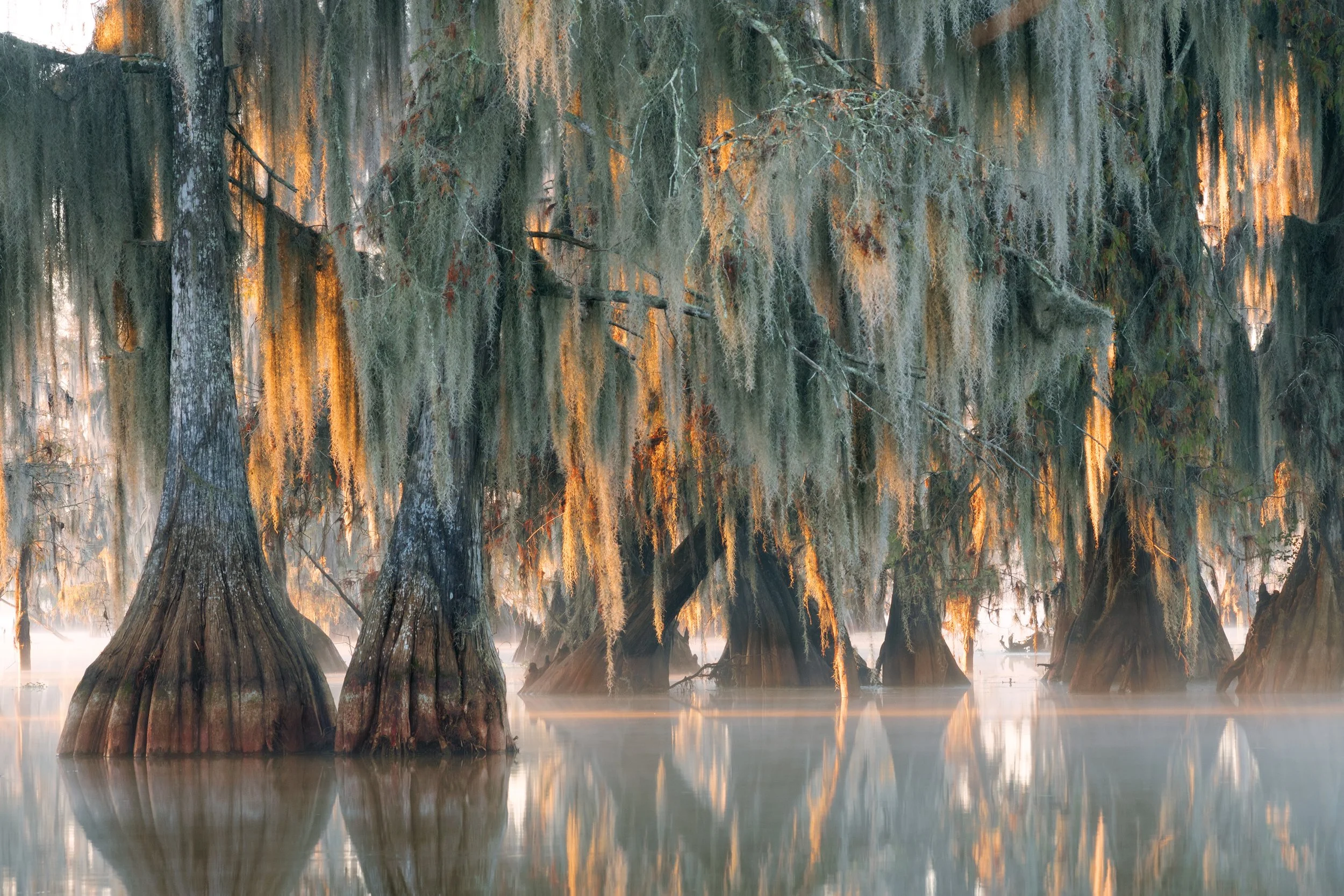
Few things establish a Southern sense of place faster than Spanish moss. It softens old cemeteries, shades coastal lanes and gives even the brightest afternoon a touch of mystery. We know the look instantly.
The plant itself, however, is not quite what it seems.
Spanish moss is a flowering bromeliad, making it a distant relative of the pineapple. Its scientific name is Tillandsiausneoides, but “Spanish moss” has proven much easier to remember.
Living on Air
Spanish moss is an air plant. It has no functioning roots and does not draw nourishment from the trees it covers. Instead, its thin, silvery leaves absorb moisture and nutrients from rain, humidity and particles carried through the air.
That makes it an epiphyte, not a parasite. The tree is simply a place to land.
Spanish moss is especially fond of live oaks and bald cypress trees, both well suited to the warm, humid landscapes where it thrives. Wind and birds carry small fragments from limb to limb, allowing one gray strand to become a sweeping canopy.
A particularly heavy growth can shade a tree’s leaves or add weight to weakened branches, but Spanish moss does not normally kill a healthy tree.
A Name Born from Rivalry
One account traces the familiar name to French settlers, who thought the plant resembled the beards worn by Spanish explorers. They called it barbe espagnole, or Spanish beard.
The Spanish reportedly answered with their own name: French hair.
The French version won.
Long before Europeans arrived, Indigenous communities had their own names and uses for the plant. Over time, Spanish moss became practical as well as picturesque. It was harvested, cured and used in mattresses, furniture stuffing, insulation and packing material. In the early automobile industry, processed moss even found its way into car-seat upholstery.
About Those Chiggers
Nearly every Southern child has heard the warning: Never bring Spanish moss inside because it is full of chiggers.
The truth is less dramatic. Spanish moss hanging in the trees is not automatically crawling with them. Once it falls to the ground, however, it can become shelter for insects and other small creatures. Picking up a fresh handful from the forest floor is still probably not the best souvenir strategy.
The South in Silhouette
Spanish moss grows well beyond the American South, but here it has become something larger than a plant. It is part of the region’s visual language.
It signals water nearby. Heat and humidity. An old road, a tidal creek or a house that has watched generations pass beneath its branches.
A live oak is beautiful on its own. Draped in Spanish moss, it becomes a landmark, a memory and a little bit of Southern mythology.
It may be neither Spanish nor moss. But few things are more unmistakably Southern.
Seen in the South
Spanish moss has a way of making even an ordinary Southern road feel like a scene worth remembering. Have a photo you love? Send it our way. We may feature it in an upcoming Seen in the South.
Join In
Show us what you see, who you know, and what matters.