Worth the Detour: Chapel of Ease
On St. Helena Island, a roadside ruin tells a Lowcountry story that stretches from colonial Beaufort through emancipation, war, and the generations that followed.
There are places you plan a trip around, and then there are places that make you hit the brakes.
The Chapel of Ease on St. Helena Island is the latter.
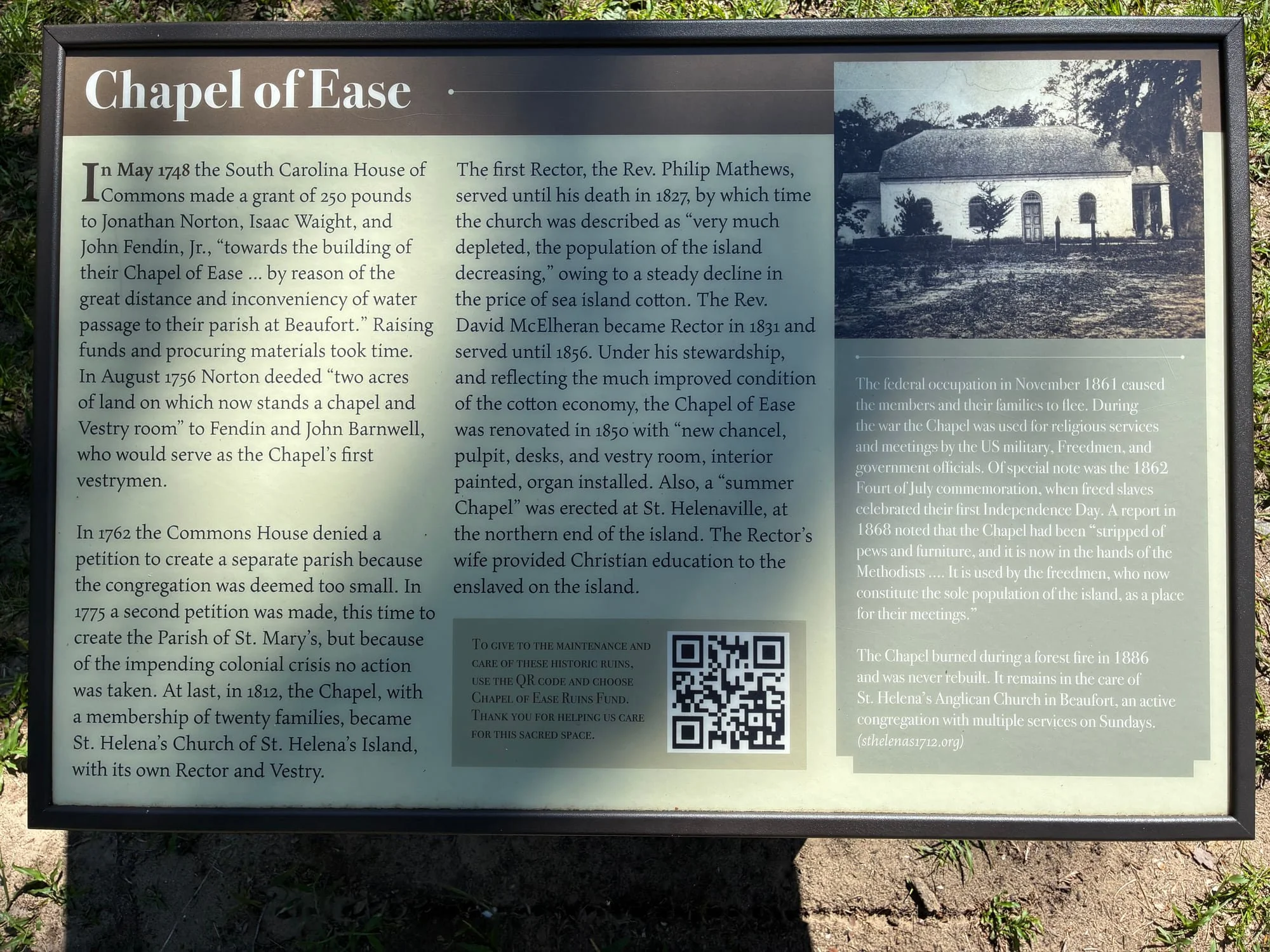
Built in the 1750s, the chapel gave island residents a closer place to worship when the trip by water to their Beaufort parish was simply too far. By 1812, the congregation had grown enough to become St. Helena’s Church of St. Helena’s Island, with its own rector and vestry.
Its history, though, is inseparable from the complicated history of the Lowcountry.
The chapel served white plantation families during the height of the Sea Island cotton economy, while the rector’s wife provided Christian education to enslaved people on the island. When federal troops occupied the area in 1861, many of those families fled. During the Civil War, the chapel became a gathering and worship space for U.S. military personnel, government officials, and newly freed people. An 1868 account noted that freedmen, by then the island’s primary population, were using the chapel for Methodist meetings.
Then, in 1886, a forest fire burned it.
It was never rebuilt.
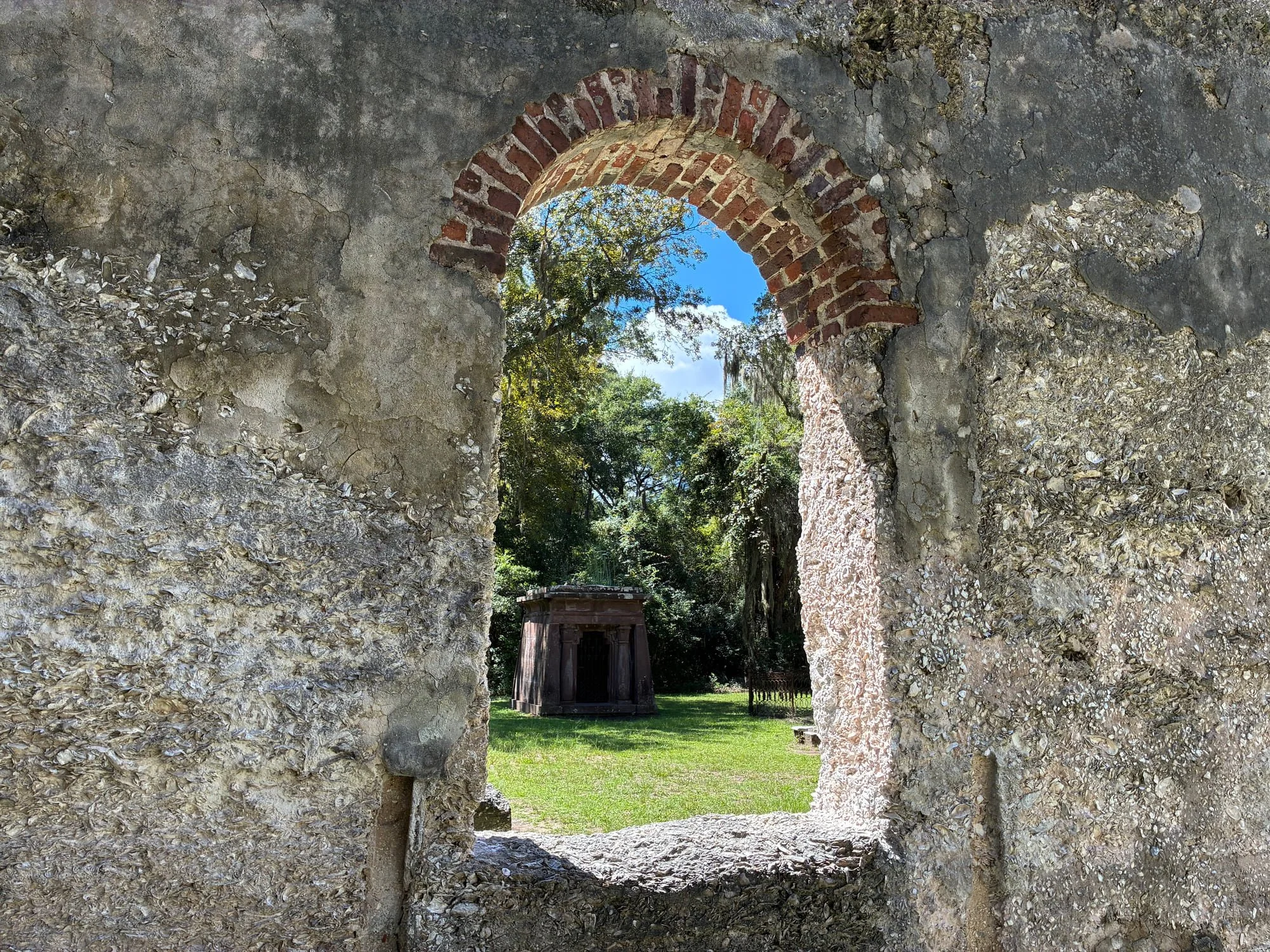
What remains today is quiet, roofless, and striking, old walls standing beneath live oaks and Lowcountry sky. It is the kind of roadside stop we love most: easy to pass, worth pulling over for, and far more layered than it first appears.
The Southerly Way: If you are traveling between Beaufort and Hunting Island, give yourself a few extra minutes. Some places do not need much time to tell a very long story.

Chapel of Ease
On St. Helena Island, a roadside ruin tells a Lowcountry story that stretches from colonial Beaufort through emancipation, war, and the generations that followed.
There are places you plan a trip around, and then there are places that make you hit the brakes.
The Chapel of Ease on St. Helena Island is the latter.
Built in the 1750s, the chapel gave island residents a closer place to worship when the trip by water to their Beaufort parish was simply too far. By 1812, the congregation had grown enough to become St. Helena’s Church of St. Helena’s Island, with its own rector and vestry.
Its history, though, is inseparable from the complicated history of the Lowcountry.
The chapel served white plantation families during the height of the Sea Island cotton economy, while the rector’s wife provided Christian education to enslaved people on the island. When federal troops occupied the area in 1861, many of those families fled. During the Civil War, the chapel became a gathering and worship space for U.S. military personnel, government officials, and newly freed people. An 1868 account noted that freedmen, by then the island’s primary population, were using the chapel for Methodist meetings.
Then, in 1886, a forest fire burned it.
It was never rebuilt.
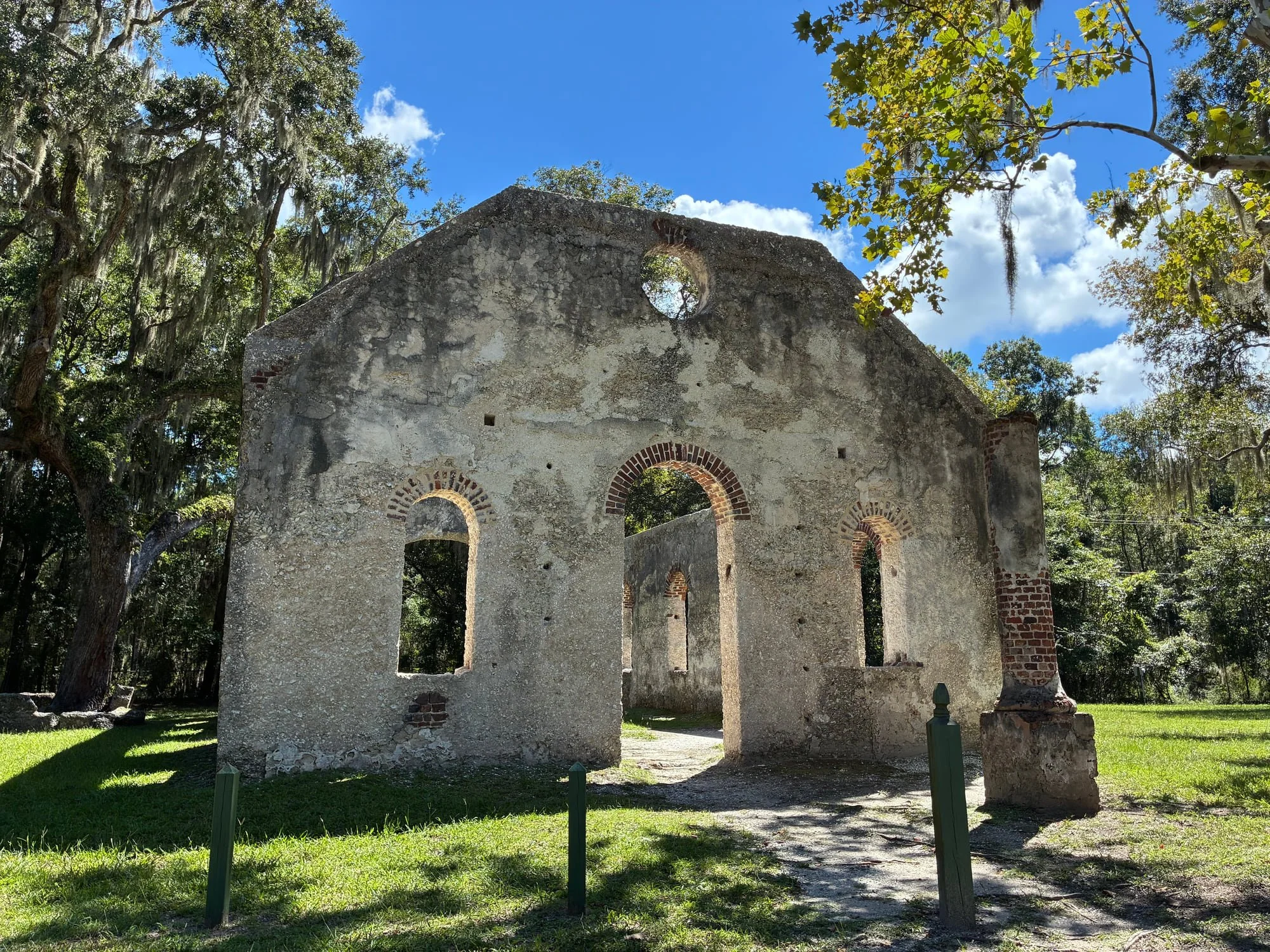
What remains today is quiet, roofless, and striking, old walls standing beneath live oaks and Lowcountry sky. It is the kind of roadside stop we love most: easy to pass, worth pulling over for, and far more layered than it first appears.
The Southerly Way: If you are traveling between Beaufort and Hunting Island, give yourself a few extra minutes. Some places do not need much time to tell a very long story.
Chapel of Ease · St. Helena Island, South Carolina
17 Lands End Rd. · St. Helena Island, SC 29920
Plan a Visit to the Chapel of EaseJoin In
Show us what you see, who you know, and what matters.