Yes, There Are Bison in Florida

Yes, There Are Bison in Florida
At Paynes Prairie, the state trades beaches and palms for wild horses, restless water, and one very unexpected herd.
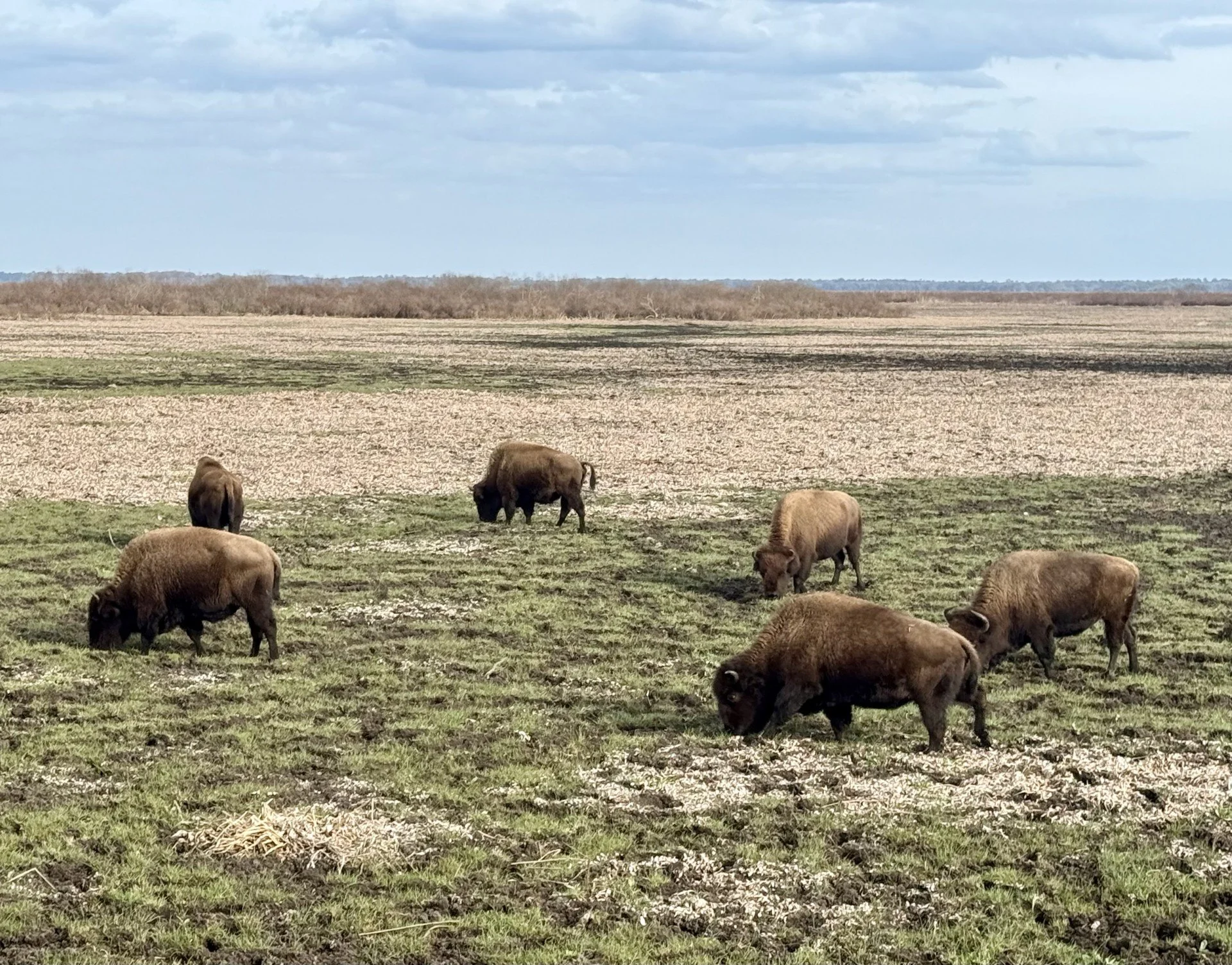
South of Gainesville, Florida forgets the script.
The land opens into a broad sweep of grass and water. Sandhill cranes call from the marsh. Alligators sun themselves along the banks. Wild horses wander through the distance, their manes lifting in the wind.
Then a dark, shaggy shape raises its head.
Yes, there are bison in Florida.
They live at Paynes Prairie Preserve State Park, a nearly 23,000-acre wilderness just outside Gainesville. Here, the horizon runs low and wide, and the Florida of beaches, palms, and pastel hotels gives way to something stranger.
The scene looks almost Western, at least until an alligator slides into the water and corrects the geography.
A Prairie That Cannot Make Up Its Mind
Paynes Prairie is not quite land, not quite lake, and never particularly interested in choosing between them.
The preserve sits in a shallow limestone basin connected to the Floridan aquifer through Alachua Sink. When the sink drains freely, the prairie is a vast grassland threaded with marshes and ponds. When sediment blocks it, water spreads across the basin.
From 1871 to 1891, the prairie filled so completely that paddle boats crossed what became known as Alachua Lake. Eventually, the sink cleared, the lake drained, and the grass returned.
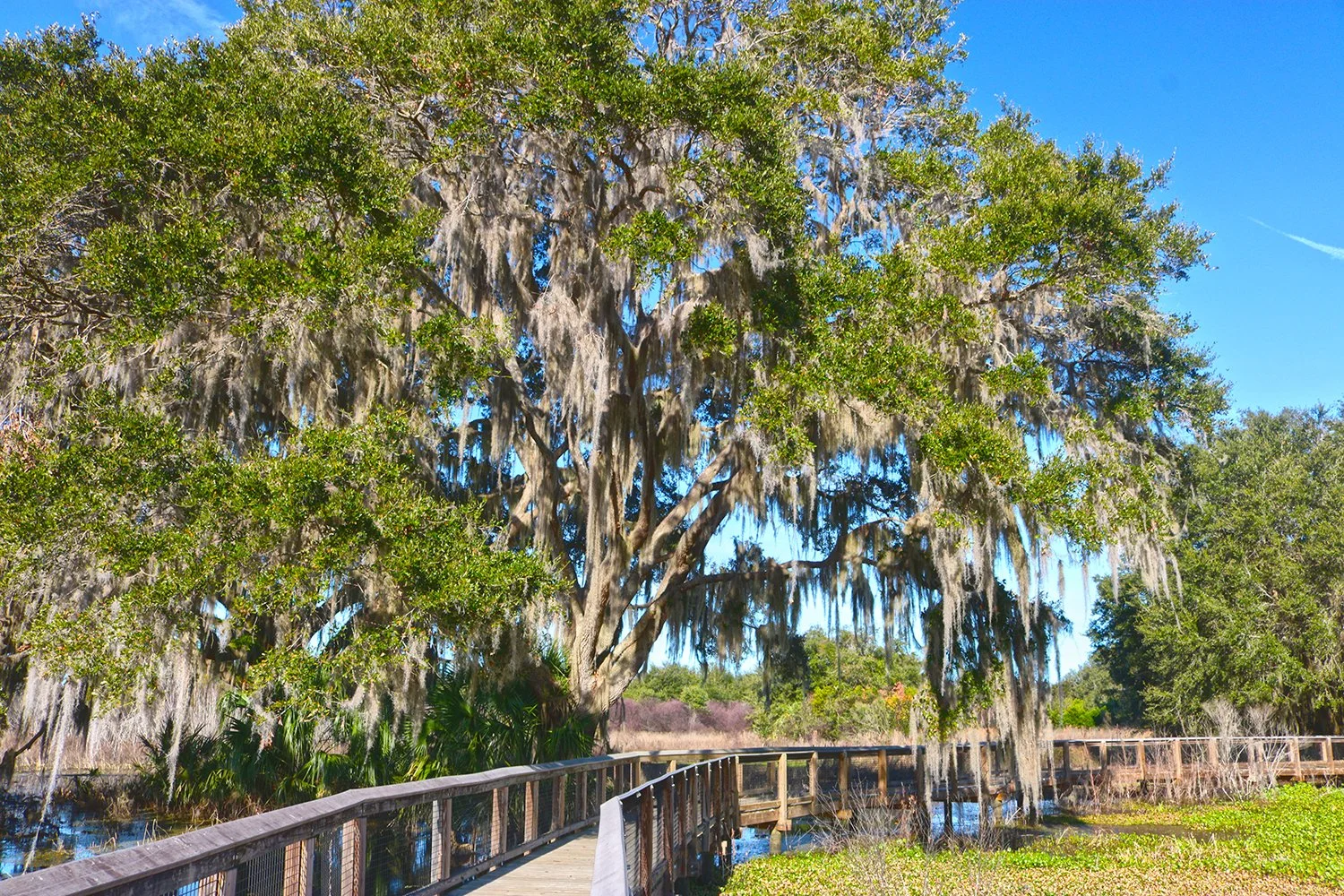
This restless water is part of what makes the prairie so alive. The preserve contains more than twenty distinct natural communities, hundreds of plant species, and nearly 300 species of birds. Bald eagles fly overhead. Snail kites hunt above the wetlands. Great blue herons stand in the shallows with the stern posture of disappointed schoolmasters.
The bison still manage to steal the scene.
How Bison Came Back to Florida
Bison are so firmly fixed in the American imagination as creatures of the Great Plains that seeing one in Florida feels like spotting a flamingo in Montana.
Yet historical records place small numbers of American bison in north-central Florida before they disappeared from the state in the late 1700s. Their range once extended much farther east and south than most people realize.
In 1975, the Florida Park Service brought a small herd of plains bison from the Wichita Mountains National Wildlife Refuge to Paynes Prairie. The animals were part of an effort to interpret the ecological history of the landscape and restore a glimpse of the Florida that existed before highways, subdivisions, and grocery stores chilled to the temperature of February.
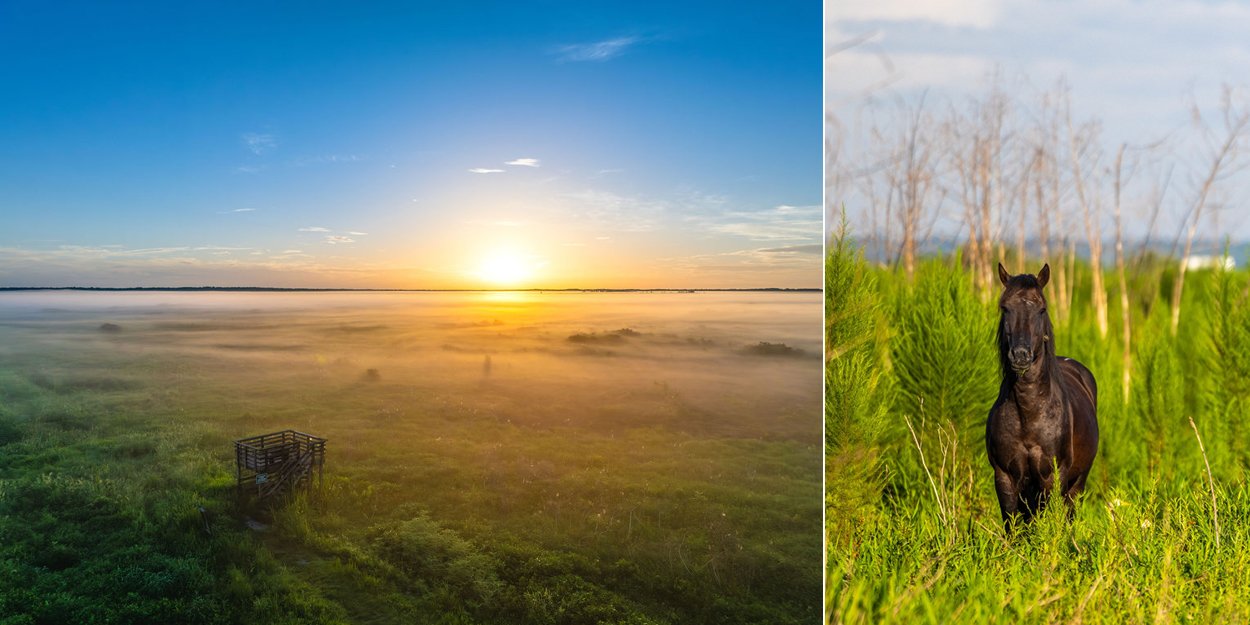
The bison share the preserve with Florida cracker horses and cattle, heritage breeds descended from Spanish colonial stock. Small, agile, and adapted to Florida’s heat and insects, the horses take their name from the cracking whips of early cattle drivers. Long before cowboys defined the American West, Spanish, Indigenous, Black, and white herders worked Florida’s ranges. Their animals still carry that history across the prairie, though they make it look rather more romantic than it was.
Paynes Prairie has never been untouched. Native peoples lived, hunted, traveled, and settled around the basin for thousands of years. Spanish ranching, Seminole settlement, colonial conflict, cattle operations, canals, roads, and attempted drainage all left their marks.
The prairie is not a landscape outside history. It is a landscape layered with it.
Looking for Bison
Most visitors arrive hoping to see the herd. The bison, having received no notice of this arrangement, may or may not cooperate.
They roam a large preserve, and sightings are never guaranteed. You may scan the horizon, identify a promising dark shape, and discover that you have been staring at a shrub. The shrub will offer no apology.
But the search forces you to slow down. Grass bends beneath the wind. A hawk circles over the basin. Lotus leaves spread across the water. A horse appears near the marsh, then vanishes behind a rise. What first seemed empty begins to look crowded.
That may be the real gift of Paynes Prairie. The bison provide the surprise, but the landscape delivers the story. This is Florida as grassland and wetland, as deep history and daily weather, as sinkhole, alligator, horse, and sky.
It is a place too restless to become scenery. Water rises. Trails close. Fire clears old growth. Animals move in and out of view. One visit may reveal a green expanse, while the next offers a shining sheet of water.
Florida has spent generations trying to tame places like this, to drain wetlands, redirect water, and make wild land useful. Paynes Prairie has endured with a quiet stubbornness of its own. It once turned itself into a lake for twenty years. It is not easily persuaded.
And somewhere in all that grass, a bison raises its shaggy head, looking both impossible and perfectly at home.
Paynes Prairie Preserve State Park · Micanopy, Florida
100 Savannah Blvd. · Micanopy, FL 32667
Plan a Visit to Paynes Prairie State ParkJoin In
Show us what you see, who you know, and what matters.