A Place at the Table

A Place at the Table
In New Orleans, the dead aren't necessarily gone. Sometimes they're simply expected for dinner.
This October, The Southerly Way is exploring the stories the South refuses to surrender, looking beyond hauntings and legends to the histories that keep them alive. Southerly Gothic began with a question: Why does the South hold onto its ghosts? Over the coming weeks, we are looking at places where history and folklore have become intertwined, and at the stories that continue to linger long after the people at their center are gone.
Some stories refuse to stay buried.
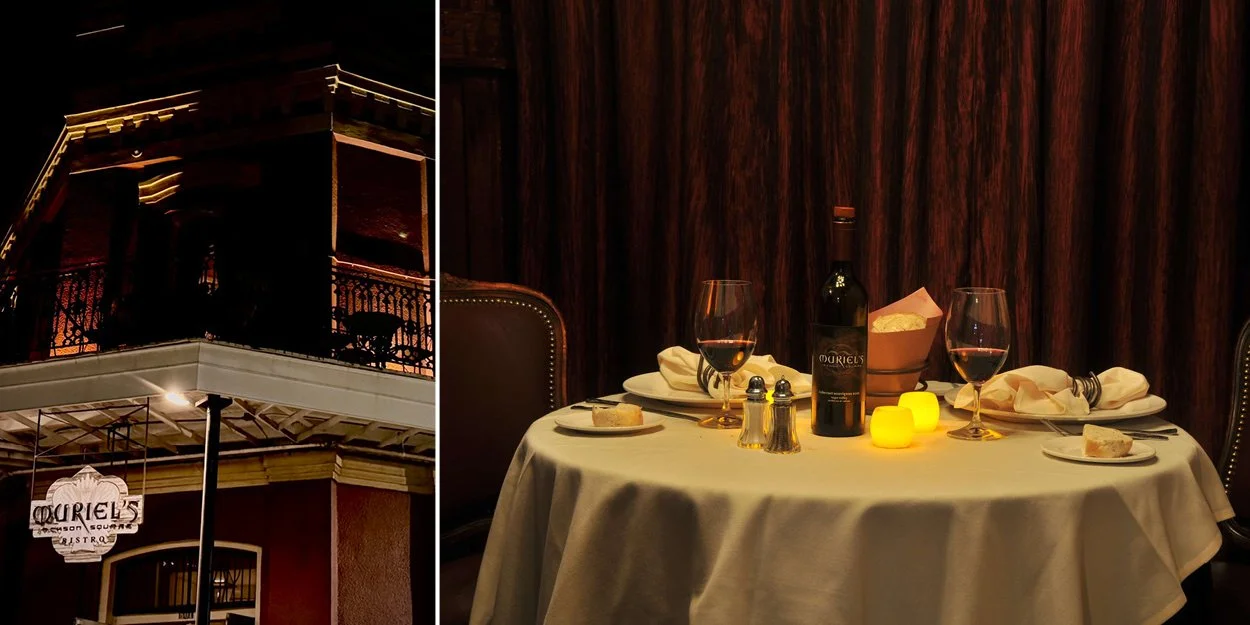
Our first stop is New Orleans, where one of those stories has a permanent reservation.
There is a table at Muriel’s Jackson Square that is not waiting for a guest in any conventional sense. Set apart from the restaurant’s other tables, it is laid with linen, dinnerware, bread, and wine, a place traditionally kept for Pierre Antoine Lepardi Jourdan, the former owner at the center of the building’s most enduring ghost story.
No one needs to believe the story to understand the gesture. In a city famous for keeping its history close, Muriel’s has done something remarkably simple.
It has saved him a seat.
A House With a Long Memory
The corner of Chartres and St. Ann has been occupied since the earliest years of New Orleans. The history Muriel’s has assembled for the property begins in 1718, the year the city was founded, when Claude Trepagnier was granted land near what would become the Place d’Armes and, eventually, Jackson Square. The property changed hands repeatedly over the decades, and the residence standing there was partially destroyed during the Great New Orleans Fire of 1788.
What followed is where documented history and legend begin to separate.
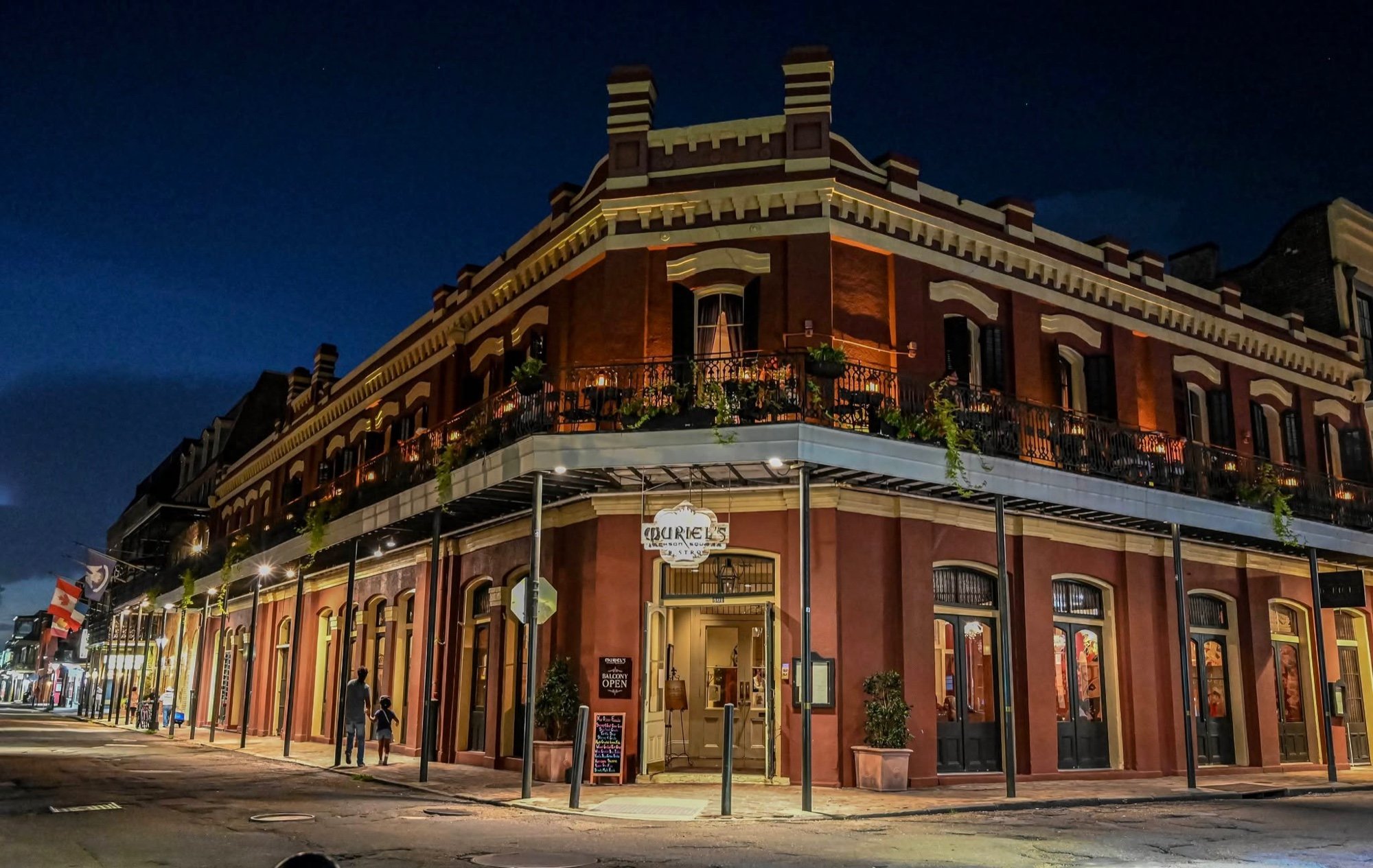
According to the story associated with Muriel’s, Pierre Antoine Lepardi Jourdan eventually acquired the property, restored it, and made it his home. The legend says Jourdan wagered the house in a poker game in 1814 and lost. Unable to surrender the home he loved, the story continues, he died by suicide on the property.
The most dramatic details of that account are not firmly established in the surviving historical record. That distinction matters in Southerly Gothic, where the space between history and folklore is often as interesting as the ghost story itself. Jourdan’s legend has endured for generations, becoming so closely associated with the building that his story now occupies it almost as completely as the man himself once did.
The Ghost at Muriel’s
Jourdan has become inseparable from the modern identity of Muriel’s. The restaurant opened in 2001 following an extensive restoration of the historic property, and today it makes no attempt to hide the supernatural reputation that came with the building.
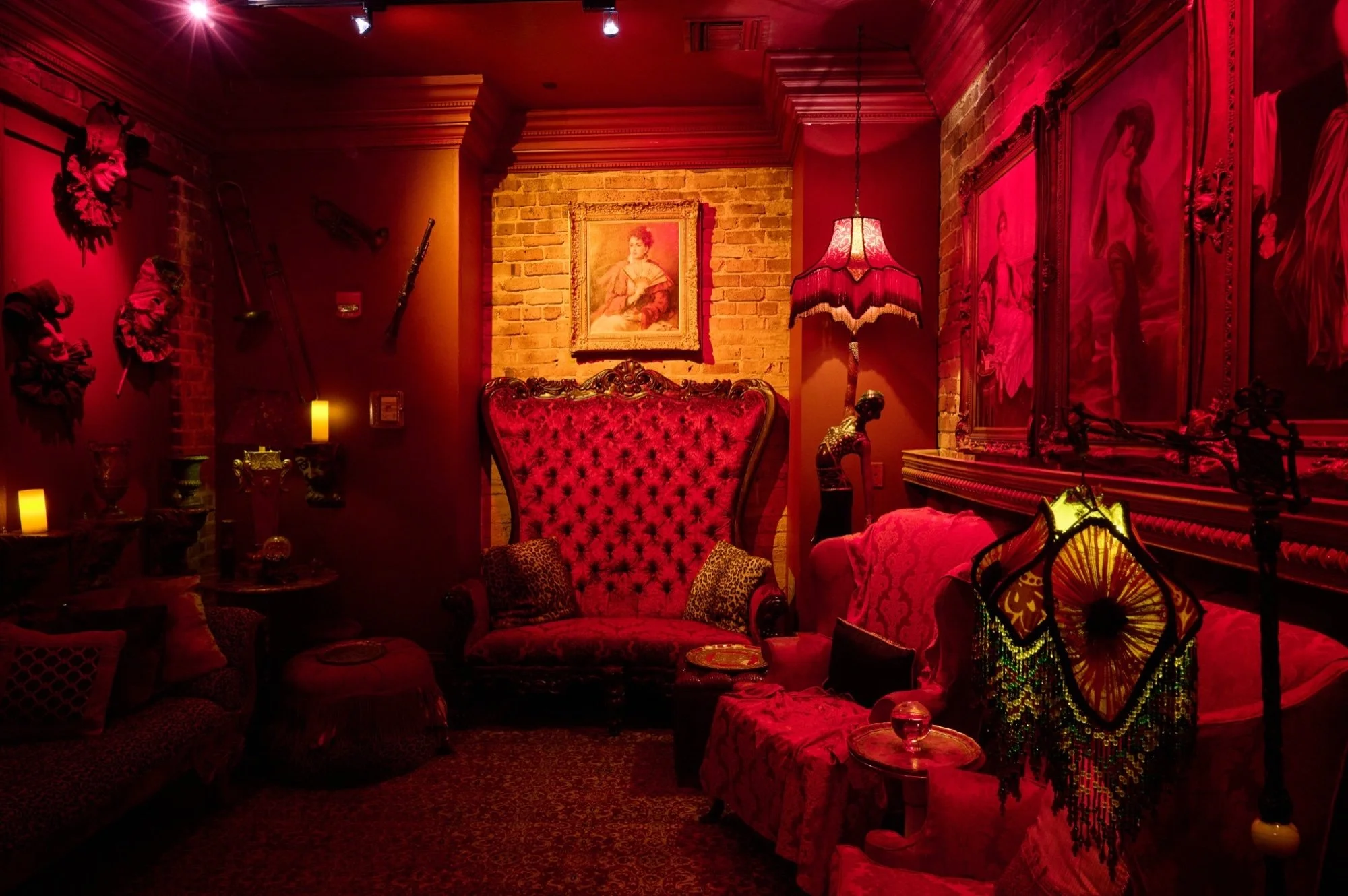
Muriel’s identifies Jourdan as its primary resident spirit, and stories of unexplained sounds, moving objects, strange shadows, and other activity have accumulated around the property. Upstairs, two rooms known as the Séance Lounges lean fully into that history with exposed brick, saturated reds, silk, tassels, antique furnishings, and low light.
Downstairs, however, the acknowledgment is quieter. The table traditionally kept for Jourdan turns an invisible story into something tangible. There is an empty chair where someone could sit, dinnerware waiting to be used, and bread and wine set out for a guest who has been dead for generations.
The restaurant does not merely tell visitors that a former owner may still linger here. It makes room for him.
And perhaps that is what makes the table more compelling than any account of a mysterious noise or unexplained shadow. Ghost stories usually ask us to imagine what we cannot see. At Muriel’s, the empty chair gives the story a physical presence.
Upstairs
The Séance Lounge is considerably more theatrical. Climb the stairs from the polished dining rooms below and the atmosphere changes, giving way to a space seemingly designed for the particular pleasure of wondering what might happen after everyone else has gone home.
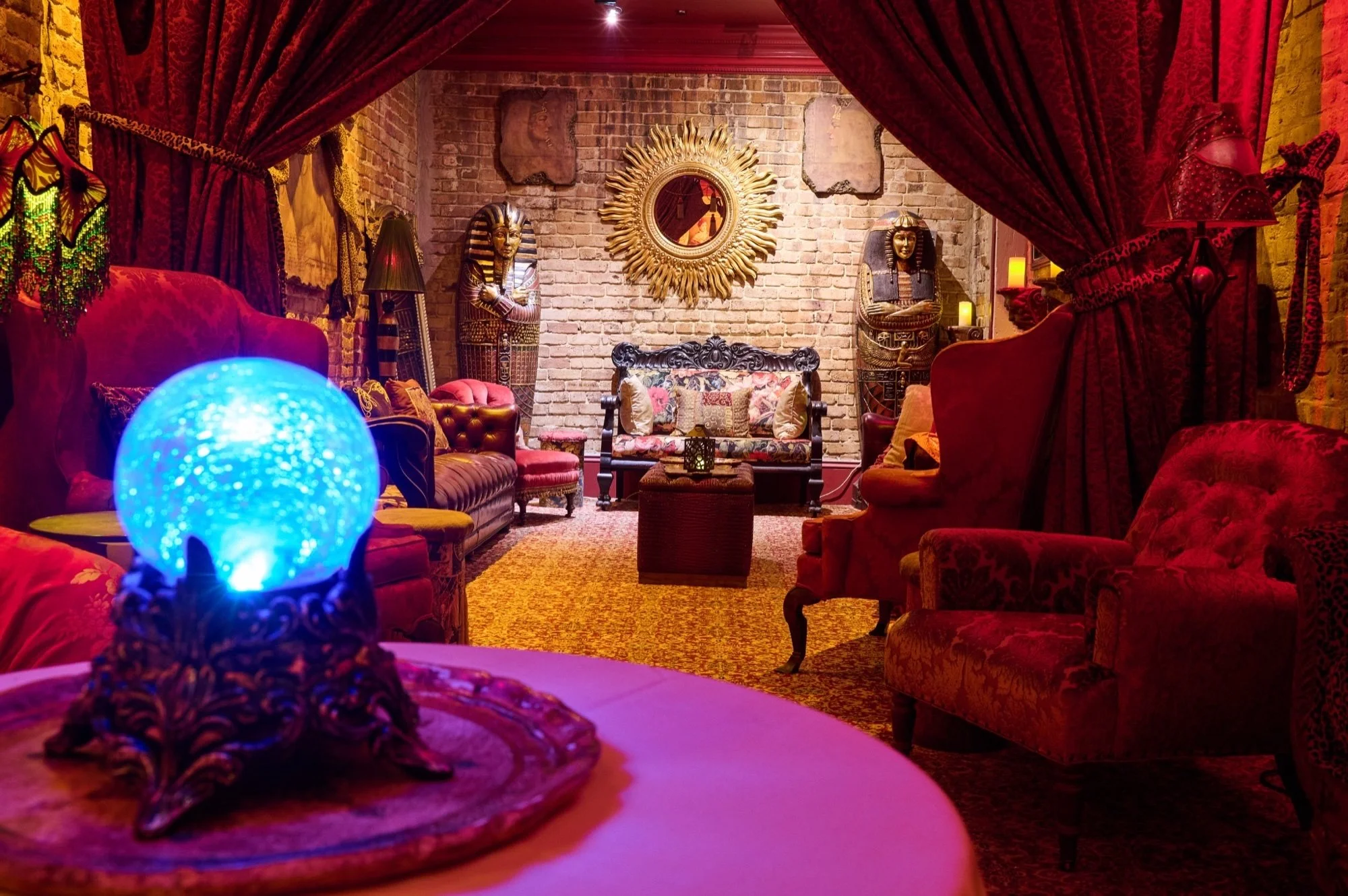
Muriel’s encourages guests to visit the lounge when it is not being used for a private event, and it is easy to understand the appeal. The rooms feel removed from the brightness and movement of Jackson Square just beyond the walls, creating a place where history, folklore, and carefully cultivated atmosphere have become difficult to separate.
Whether anything supernatural has ever happened there is almost beside the point. The Séance Lounge gives the legend somewhere to live, while the table downstairs gives its supposed inhabitant somewhere to sit.
Together, they transform a story handed down about the building into part of the experience of being there.
A City That Keeps Its Stories Close
Muriel’s could hardly have a more fitting address for such a legend.
New Orleans has spent centuries accumulating stories alongside its architecture. Catholic traditions, African and Caribbean influences, family histories, burial customs, folklore, music, and ritual have all contributed to a culture in which the past can feel unusually present. Its cemeteries make remembrance part of the visible landscape, while generations of stories attach themselves to houses, hotels, restaurants, courtyards, and streets.
That rich history deserves more than being reduced to ghosts, vampires, and things that go bump on Bourbon Street. The supernatural tourism is real, but so are the cultural traditions beneath it, and they are not the same thing.
There is room, however, for a good ghost story.
Especially when we remember that folklore does not have to be documented history to tell us something meaningful about a place. Sometimes what a community continues to repeat is revealing in its own right.
At Muriel’s, the legend of Pierre Jourdan has survived long enough to become part of the building again. Visitors come looking for his table. They climb the stairs to see the Séance Lounge. They hear the story and, inevitably, carry some version of it back outside.
A Place at the Table
Step outside Muriel’s and Jackson Square is immediately there, alive with visitors, artists, musicians, carriages, and the constant movement of the French Quarter. The contrast makes the quiet ritual inside seem even more peculiar.
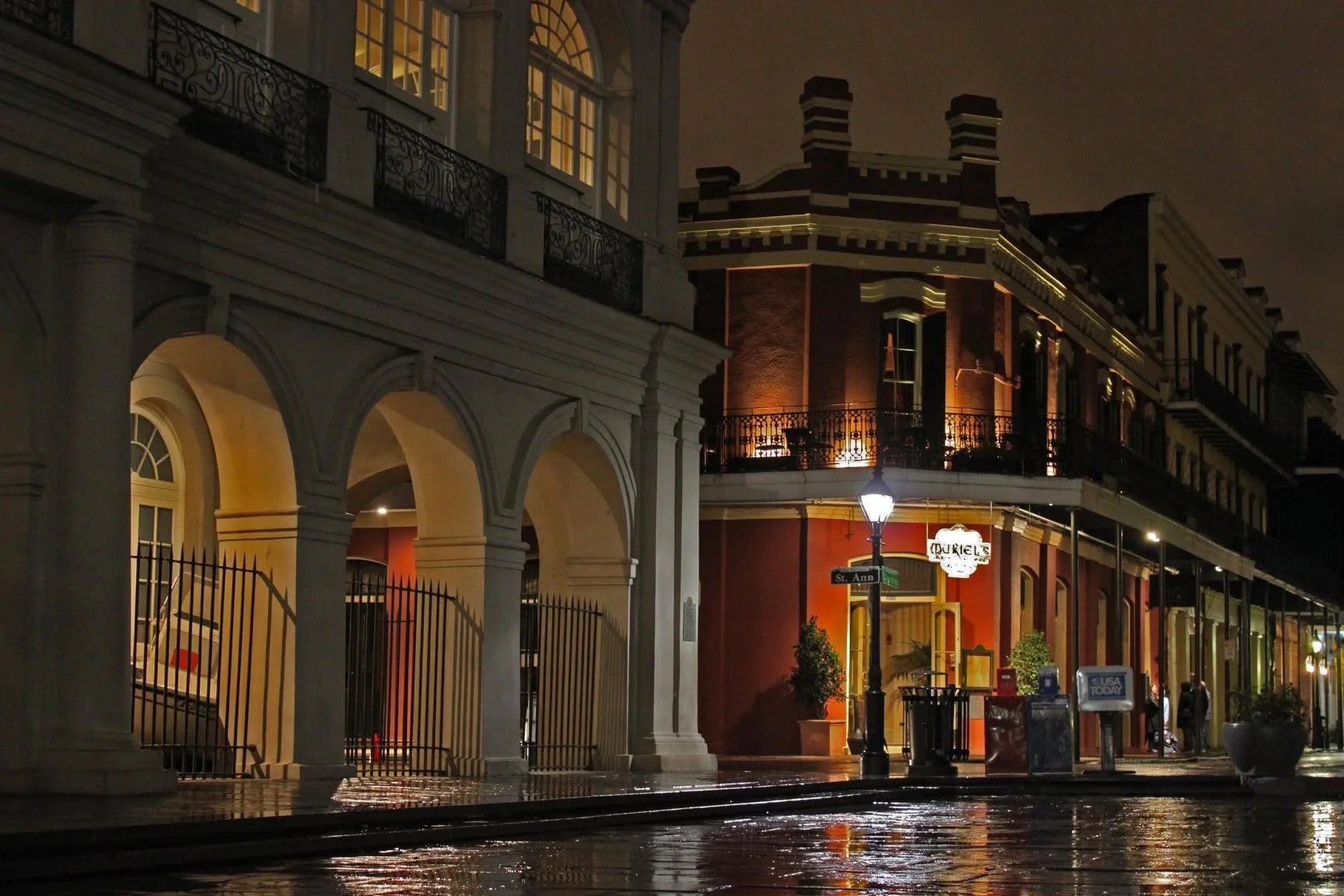
A table remains set for a man who may or may not haunt the building, based on a story whose most dramatic details have become difficult to separate from legend.
And yet the place setting is real.
Perhaps that is enough.
The question at the heart of Southerly Gothic is not whether Pierre Jourdan still walks through Muriel’s after dark. It is why, more than two centuries later, people still tell us that he does.
For now, his story has an answer waiting at the edge of Jackson Square.
Pull up a chair. Just be careful which one you choose.
Muriel’s Jackson Square
New Orleans, Louisiana
801 Chartres Street · New Orleans, LA 70116
Visit Muriel’s Jackson Square →Join In
Show us what you see, who you know, and what matters.