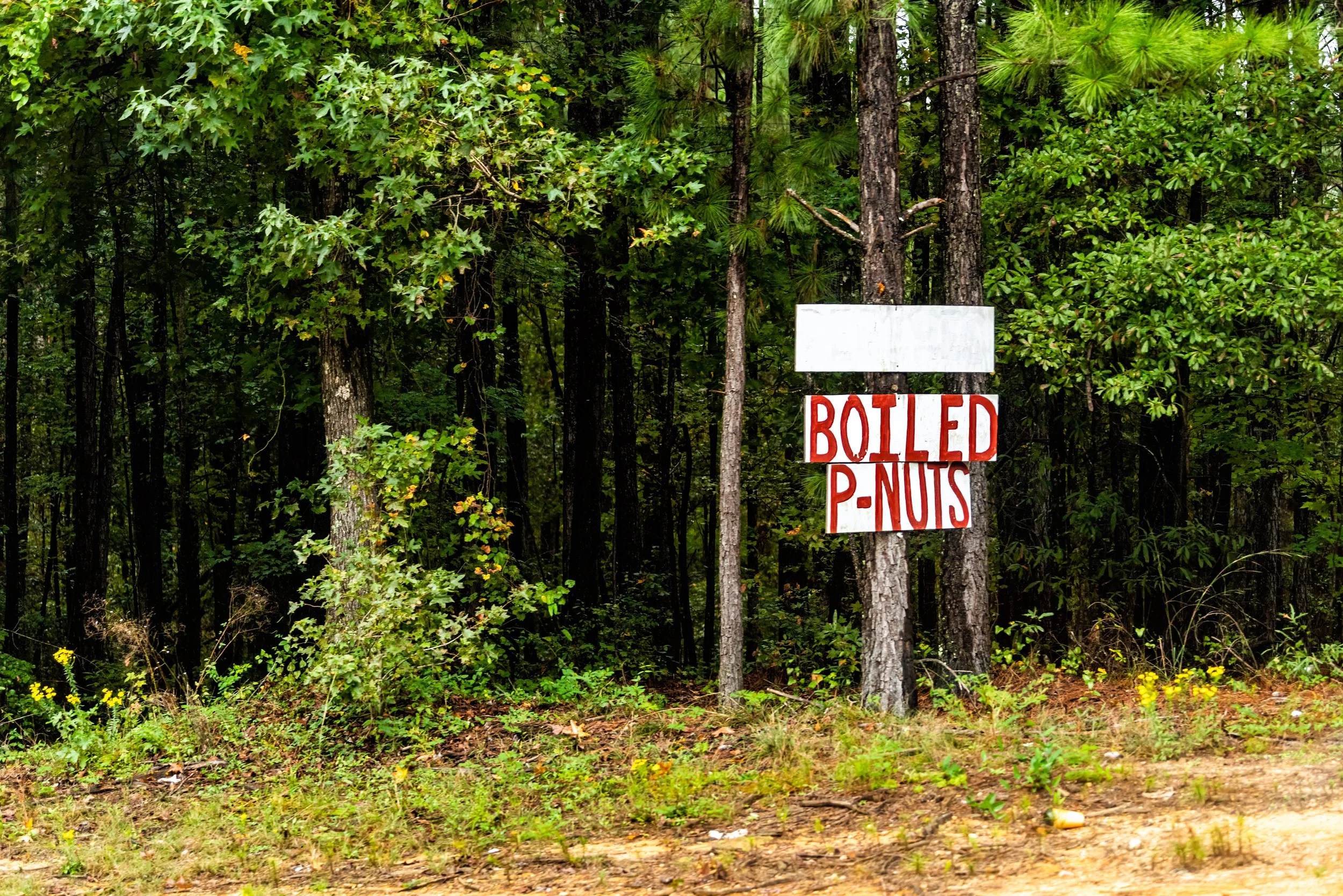

Beaufort, SC: The Lowcountry Without an Itinerary
Charleston may be the Lowcountry name everyone knows, but follow the coast south and a smaller, quieter version of coastal South Carolina unfolds around the Beaufort River.
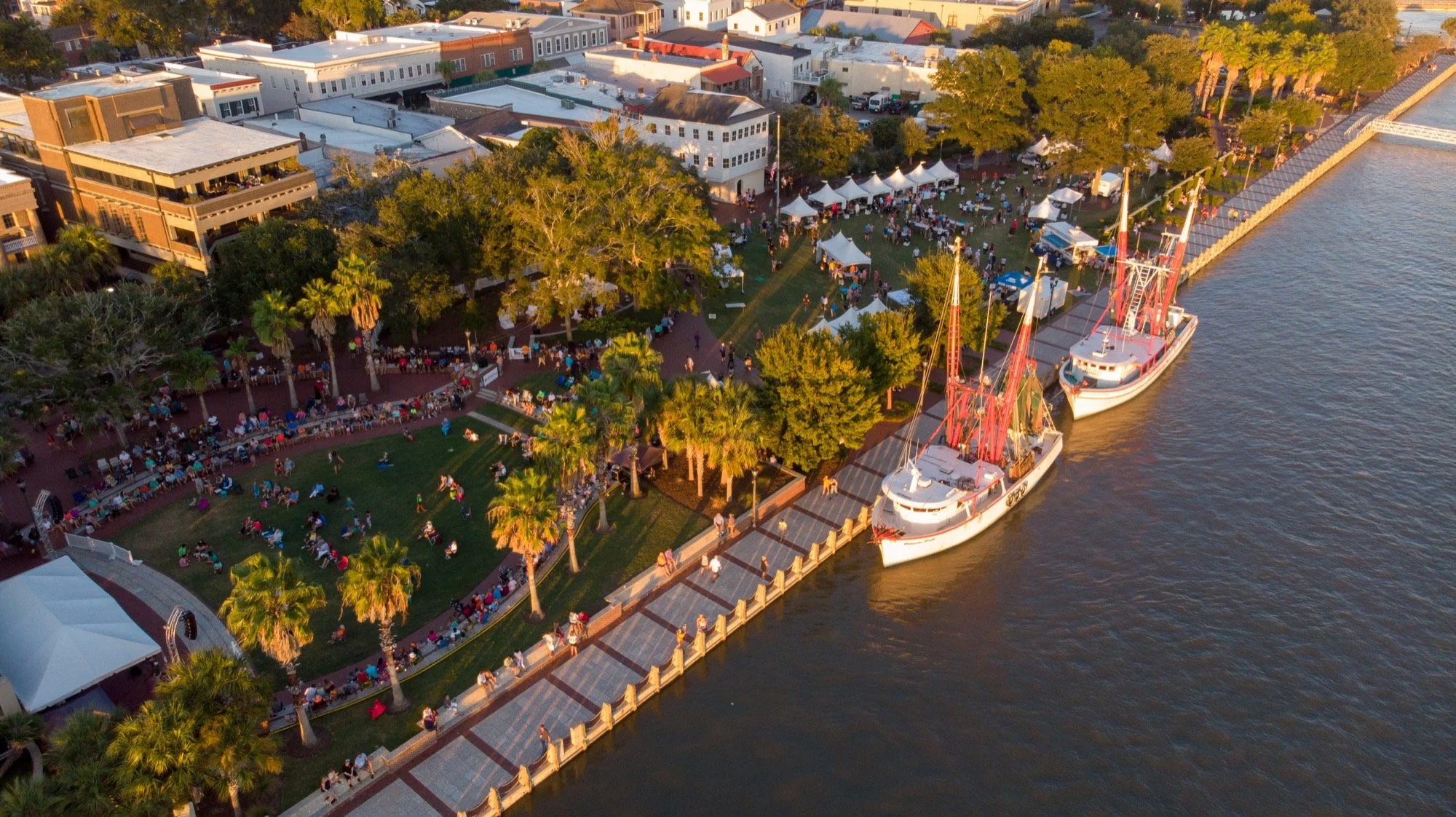
Beaufort has many of the things that make this part of the South so irresistible: live oaks, historic houses, tidal water, shrimp boats, church steeples, and streets made for wandering. What it doesn’t have is the feeling that you need to see everything before the weekend is over.
That may be its greatest luxury.
A Different Kind of Lowcountry
Beaufort is beautiful in a way that feels remarkably unforced. Live oaks stretch across residential streets, old houses sit behind garden walls, and the river is never very far away. Downtown is compact enough to wander without much direction, moving from Bay Street toward the water and eventually back again.
The waterfront swings are among Beaufort’s simplest pleasures, facing the river and asking nothing more than a little time. From downtown, the Woods Memorial Bridge crosses the Beaufort River to Lady’s Island, where the historic streets quickly give way to marsh, docks, and tidal water.

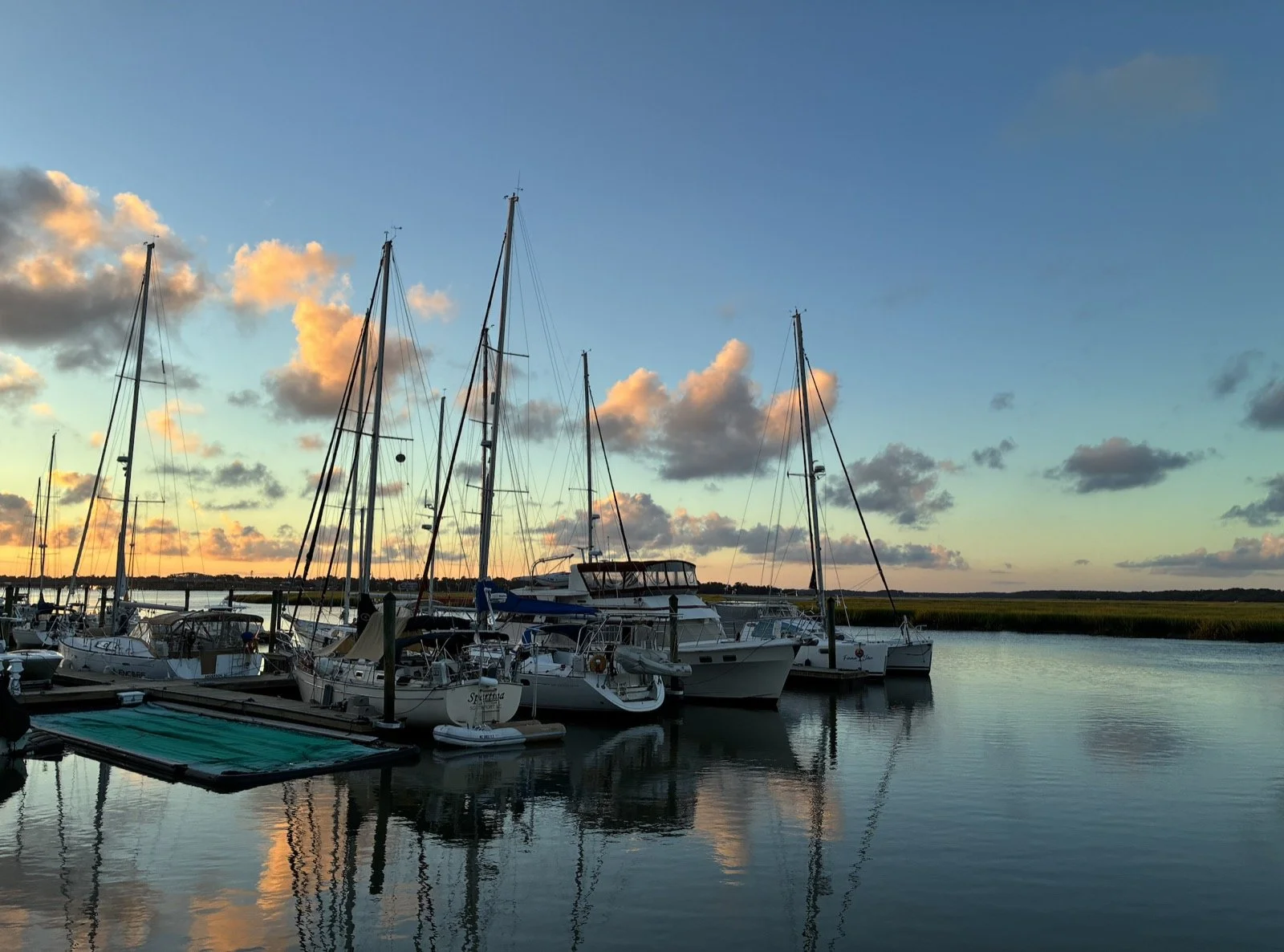
Across the bridge, Lady’s Island Dockside sits directly on the water. Even the bar can come with an unexpected view, thanks to a mirror that perfectly reflects the marsh behind it. Cornbread with herb butter, bartender-recommended mussels, and a cold beer make the transition from road to river an easy one.
Outside, the boardwalk follows the water as the sun drops and the Lowcountry light softens. Back across the bridge, Beaufort begins its shift into evening.
Downtown After Dark
If you’re lucky, you’ll happen upon an ArtWalk, when shops and galleries stay open late and people linger along the streets. Beaufort is particularly good at this kind of discovery. Restaurants and bars occupy old buildings and tucked-away spaces, and the most interesting places do not necessarily announce themselves from half a block away.
Luther’s is an exception. Set along the waterfront, it is lively, crowded, and unmistakably part of the evening. From the porch, an American flag and an Army flag hang near a Fireball sign while ceiling fans fight the heavy September air.
Nearby, a conversation between friends drifts into earshot. "This," one says, "is what Charleston was like 25 years ago."
The comparison is tempting. Both cities share centuries of history, remarkable architecture, and that unmistakable combination of marsh, river, and subtropical landscape that defines the Lowcountry. The difference is largely one of scale. Beaufort still feels like a town, with downtown giving way quickly to residential streets, open marsh, and water.
There is also a certain unpredictability to the place. At one point, a man dressed in full historical garb emerges from a restaurant (was that a musket?) and disappears down the street. The next person through the door wears a seersucker jacket. In Beaufort, neither seems particularly out of place.
Later, Hemingway’s offers the opposite experience from the bustle of Luther’s. Tucked below street level on Bay Street, the tiny bar has only a handful of stools and tables. It is the kind of place easily missed by anyone moving too quickly, which makes finding it feel less like arriving at a destination and more like discovering one.
That is Beaufort at its best.
Lunch in Port Royal
The next day’s lunch comes by recommendation from locals: Fishcamp on 11th Street in nearby Port Royal.
Port Royal deserves more than being treated as an appendage to Beaufort. The small waterfront town has its own easygoing personality, shaped by docks, shrimp boats, Battery Creek, and a sense that the water is still very much part of everyday life.
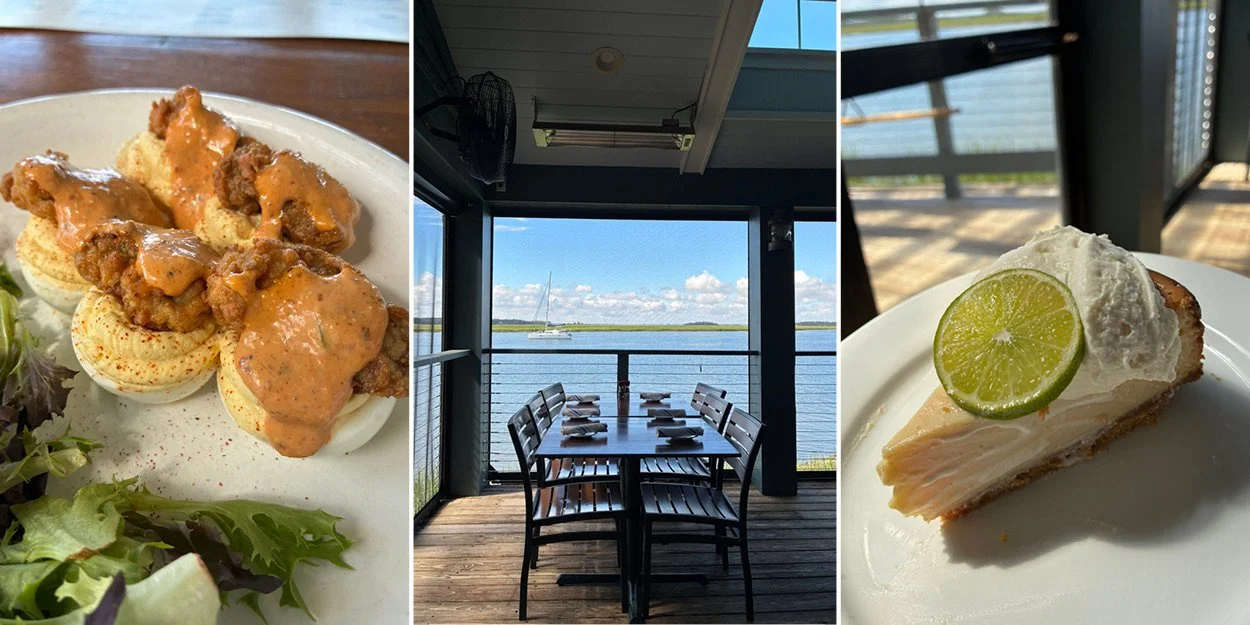
Fishcamp sits directly on that working waterfront. There is plenty of seafood to choose from, but two things linger in memory: fried oysters perched on deviled eggs, an unexpectedly perfect Lowcountry combination, and a slice of key lime pie that makes a strong argument for dessert even after lunch.
Then the mood changes.
The Other Beaufort
At Beaufort National Cemetery, live oaks stand sentinel over rows of white headstones.
The landscape is orderly and beautiful, but its uniformity only makes the differences more noticeable. Smaller markers among the familiar upright stones recall an era when many of the Civil War dead buried here could not be identified. The cemetery was established during the war, and the scale of what it represents is difficult to separate from the quiet beauty of the grounds.
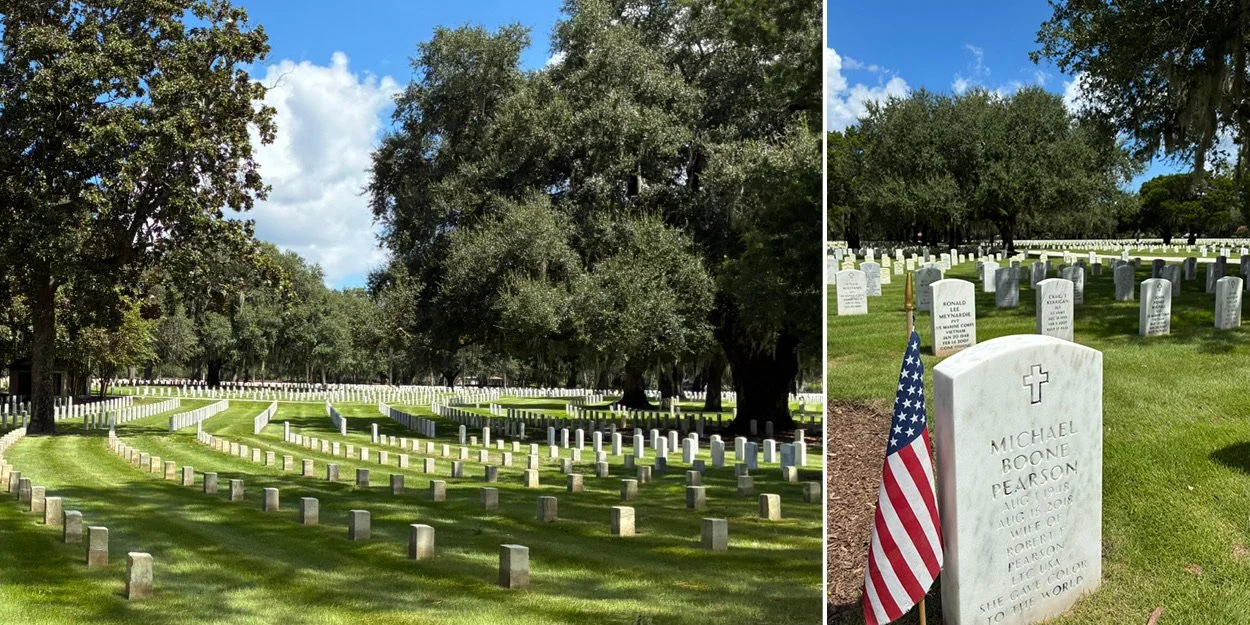
Near the exit, a sign offering a crisis line to veterans brings that history abruptly into the present. Surrounded by reminders of those who served generations ago, it quietly acknowledges that for others, the battles may continue long after service ends.
From Beaufort, the road leads deeper into the Sea Islands.
On St. Helena Island, Penn Center occupies a landscape that initially feels remarkably peaceful for a place carrying so much history. Established during the Civil War to educate formerly enslaved people, Penn School grew into an important center of African American education and Gullah Geechee culture. A century later, the campus also became connected to the Civil Rights Movement.
Not far away, the Chapel of Ease offers another kind of encounter with the past. Its tabby walls stand open to the sky among trees and graves, remnants of an 18th-century chapel once built to serve island residents who lived too far from Beaufort’s parish church.
Here, the Lowcountry begins to feel less like a collection of beautiful places and more like a landscape layered with memory.
One More Stop
Eventually, the road turns toward Charleston, but not before one final stop.
The Old Sheldon Church Ruins rise beneath enormous live oaks, brick columns and walls remaining where the church once stood. Built in the 18th century as Prince William’s Parish Church, it was burned during the Revolutionary War, rebuilt decades later, and left in ruins again following the Civil War.
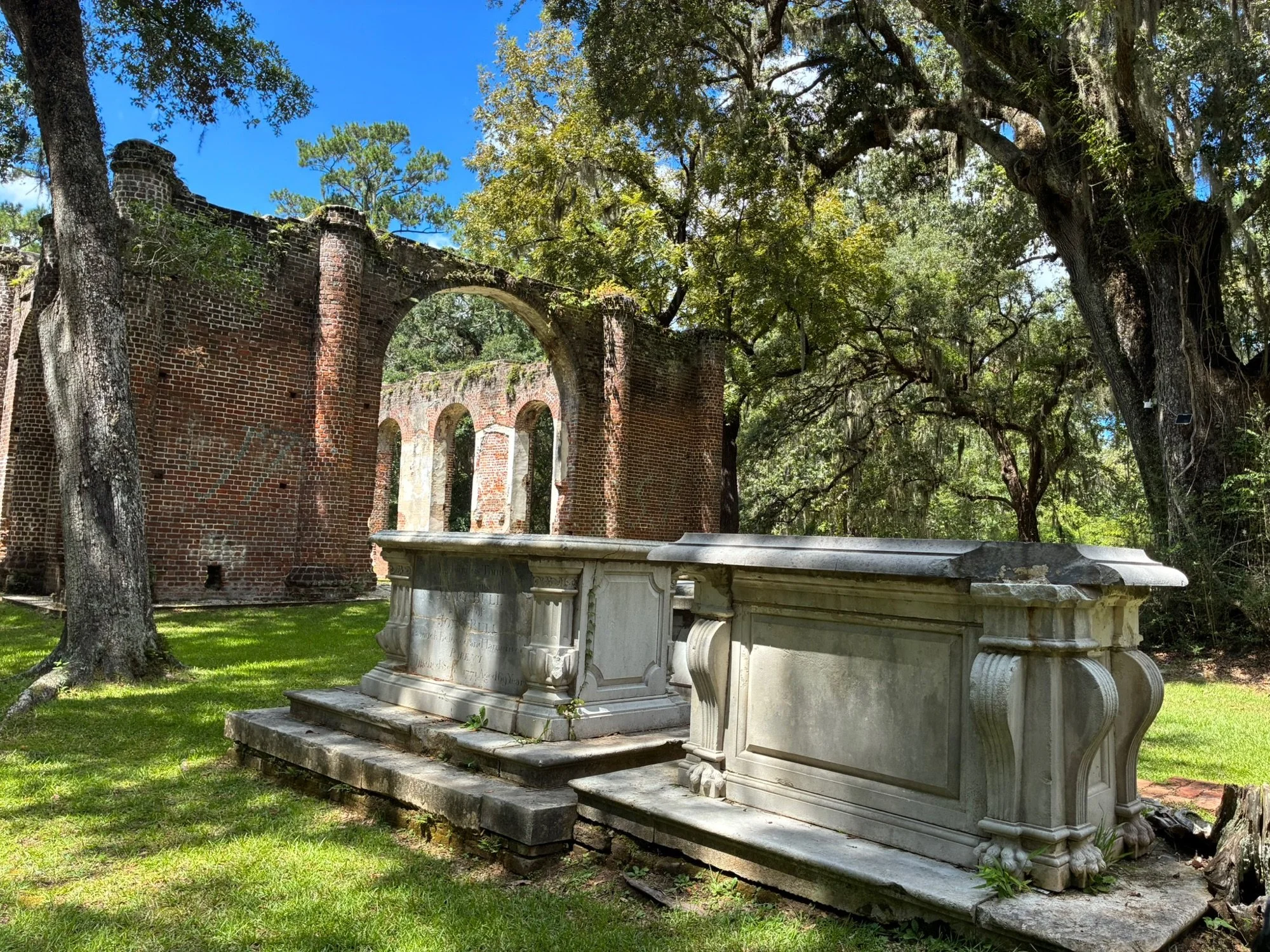
Today, what remains feels almost inseparable from its surroundings. Brick columns frame open sky, old graves rest beneath the trees, and live oaks stretch across a place where architecture and landscape have been settling together for centuries. There is no roof, no sanctuary in the traditional sense, yet the shape of the church is still unmistakable.
The effect is less one of abandonment than endurance. Time has taken much of the building, but not its presence.
What Travels With You
The road turns toward Charleston. The live oaks give way. Miles accumulate. The places of the previous day begin slipping into the rearview mirror: the swings along the river, sunset beyond the bridge, music floating through downtown, a hidden bar downstairs, shrimp boats in Port Royal, white headstones beneath old trees, and ruined walls on St. Helena.
Beaufort recedes.
But it does not disappear.
Some places demand your attention while you’re there. Beaufort has a quieter trick. It waits until you’re leaving to make you realize how much of it you’re taking with you.
Beaufort Visitor Center · Beaufort, South Carolina
713 Craven Street · Beaufort, SC 29902
Plan Your Trip to Beaufort →Join In
Show us what you see, who you know, and what matters.