Haint Blue Porch Ceilings: The Southern Color Meant to Ward Off Spirits

Haint Blue Porch Ceilings: The Southern Color Meant to Ward Off Spirits
The story behind the pale blue ceilings of Southern porches is considerably more haunting than their beauty suggests.
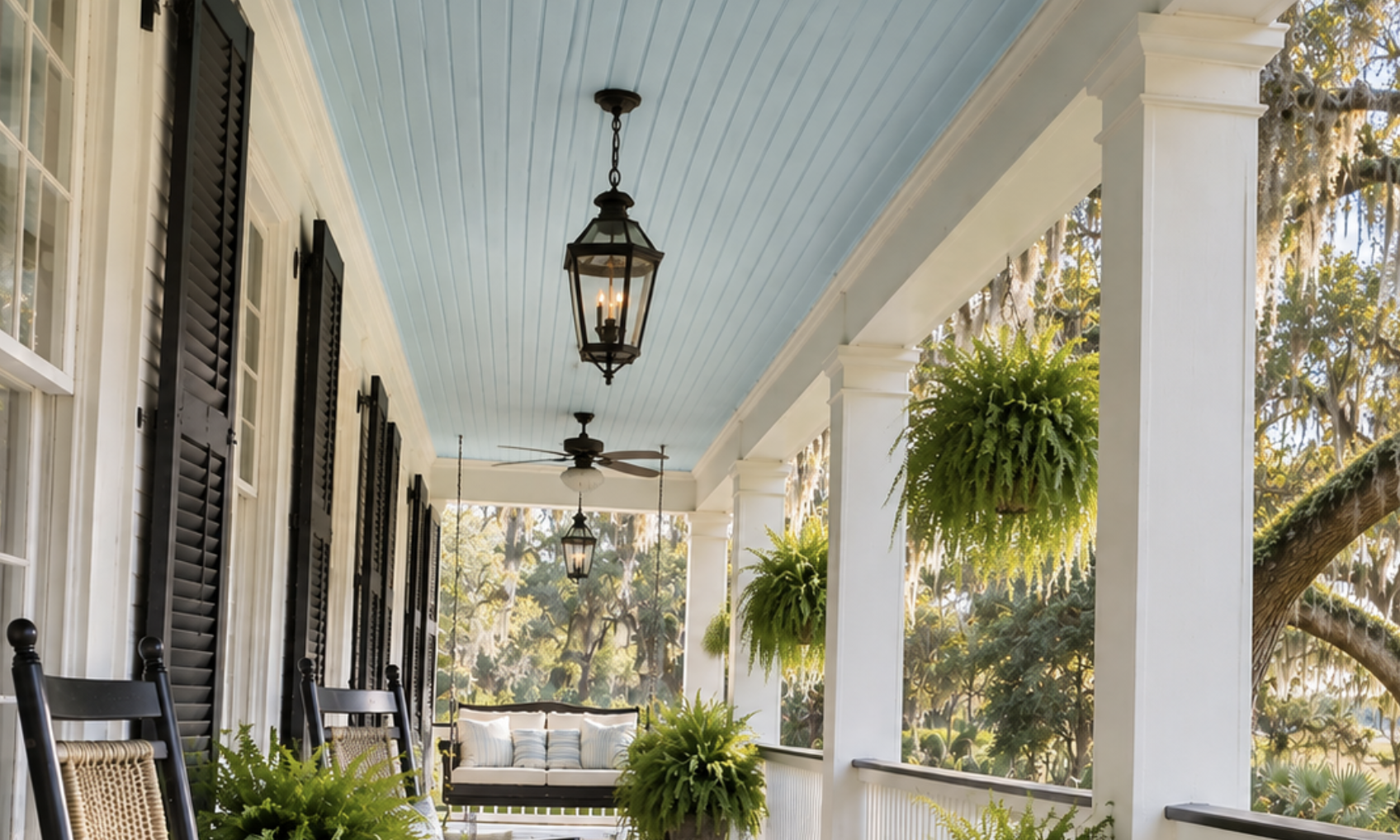
Look up on an old Southern porch and you might find a particular shade of blue overhead. Not navy. Not quite sky. Something softer, washed by sun and time.
Haint blue.
Today, it is one of those details that feels inseparable from the Southern landscape, especially across the Lowcountry. Blue ceilings hang above porch swings and rocking chairs, framed by live oaks and Spanish moss. They are beautiful enough that the color has traveled far beyond its origins.
But the story behind the blue is considerably more haunting.
The name comes from “haint,” an old word for a ghost or restless spirit. According to tradition, painting doors, shutters, and porch ceilings blue could confuse or repel spirits. A haint might mistake the color for water, which spirits were believed unable to cross, or for the open sky and pass through rather than enter the house.
The custom is particularly associated with the Gullah Geechee people of the coastal Carolinas and Georgia, descendants of enslaved West and Central Africans who preserved and adapted traditions across generations. Within that culture, beliefs surrounding spirits, protection, and the boundary between the living and the dead became part of a distinctly Lowcountry worldview.
Exactly how the familiar blue porch ceiling evolved from those traditions is harder to pin down. Like plenty of Southern folklore, the story has been repeated, embellished, and handed down until history and legend occupy the same rocking chair.
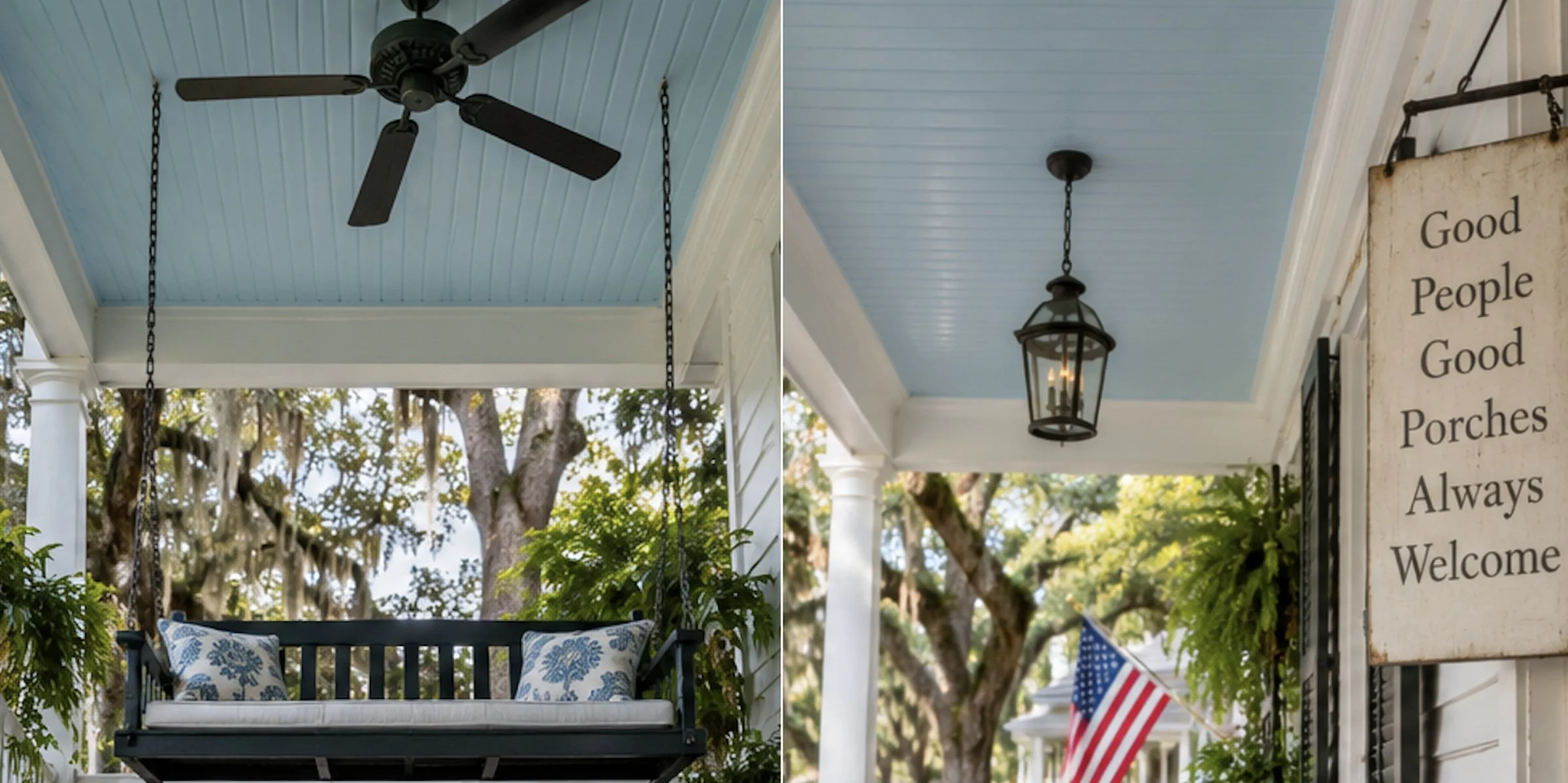
There were practical reasons for blue paint, too. Early paints were often made with ingredients such as lime, and limewash itself could help discourage insects. Over time, people began claiming the color blue kept wasps and other pests from nesting overhead. Modern paint does not appear to possess any supernatural insect-repelling powers, though the belief remains almost as persistent as the ghost story.
Eventually, haint blue moved from protective folk tradition to architectural signature. You will find versions of it from Charleston and Beaufort to Savannah and beyond, sometimes chosen because of the old stories and sometimes simply because a pale blue ceiling makes a porch feel cooler, taller, and permanently caught beneath a clear Southern sky.
And perhaps that is why the tradition has lasted.
A haint blue porch ceiling can be beautiful, practical, historical, and just a little mysterious all at once. It is a small detail carrying traces of African tradition, Lowcountry culture, architectural fashion, and generations of storytelling.
Most people painting one today probably are not expecting company from the spirit world.
But come October, with the evenings arriving earlier and Spanish moss moving in the breeze, there is something reassuring about knowing the porch is painted just in case.
Join In
Show us what you see, who you know, and what matters.