The Preacher Who Built His Own Paradise

The Preacher Who Built His Own Paradise
In a northwest Georgia town, Howard Finster turned a patch of ground into a sprawling testament to faith, invention, and the compulsion to make. The art world eventually came calling. Paradise Garden was already there.
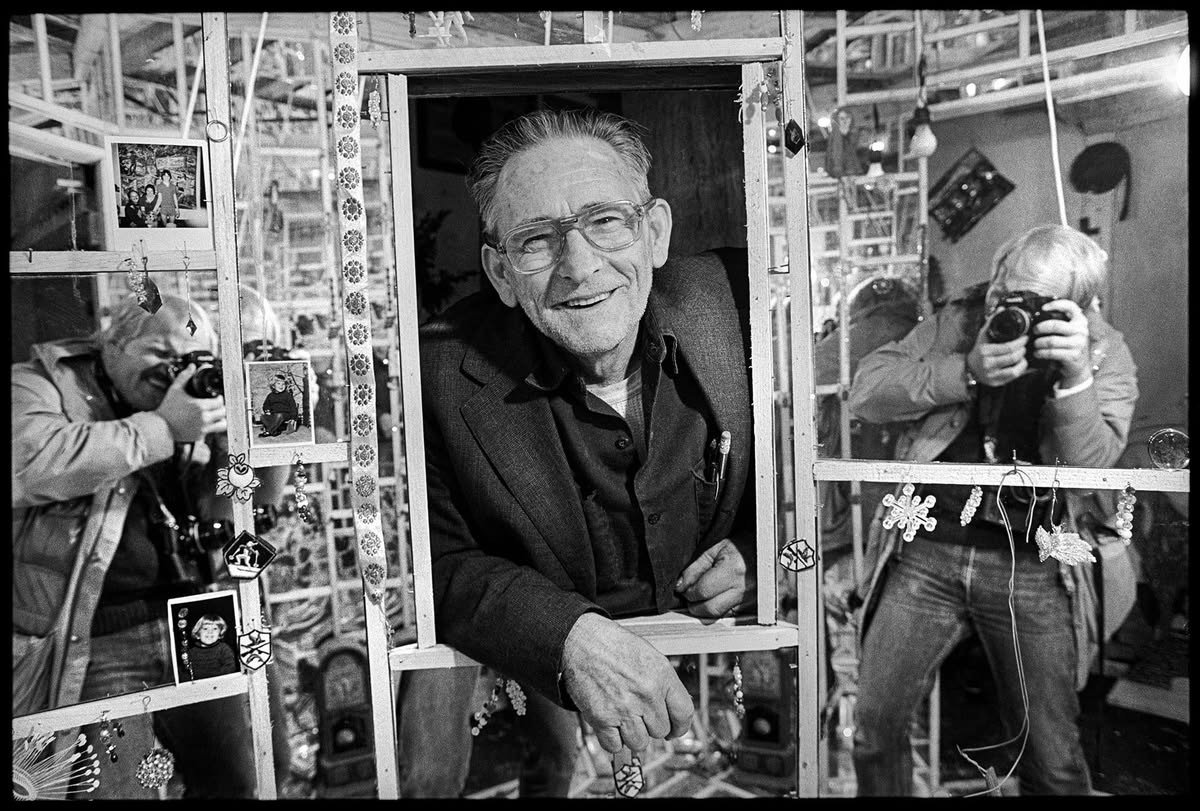
There is no particularly sensible place to begin at Paradise Garden.
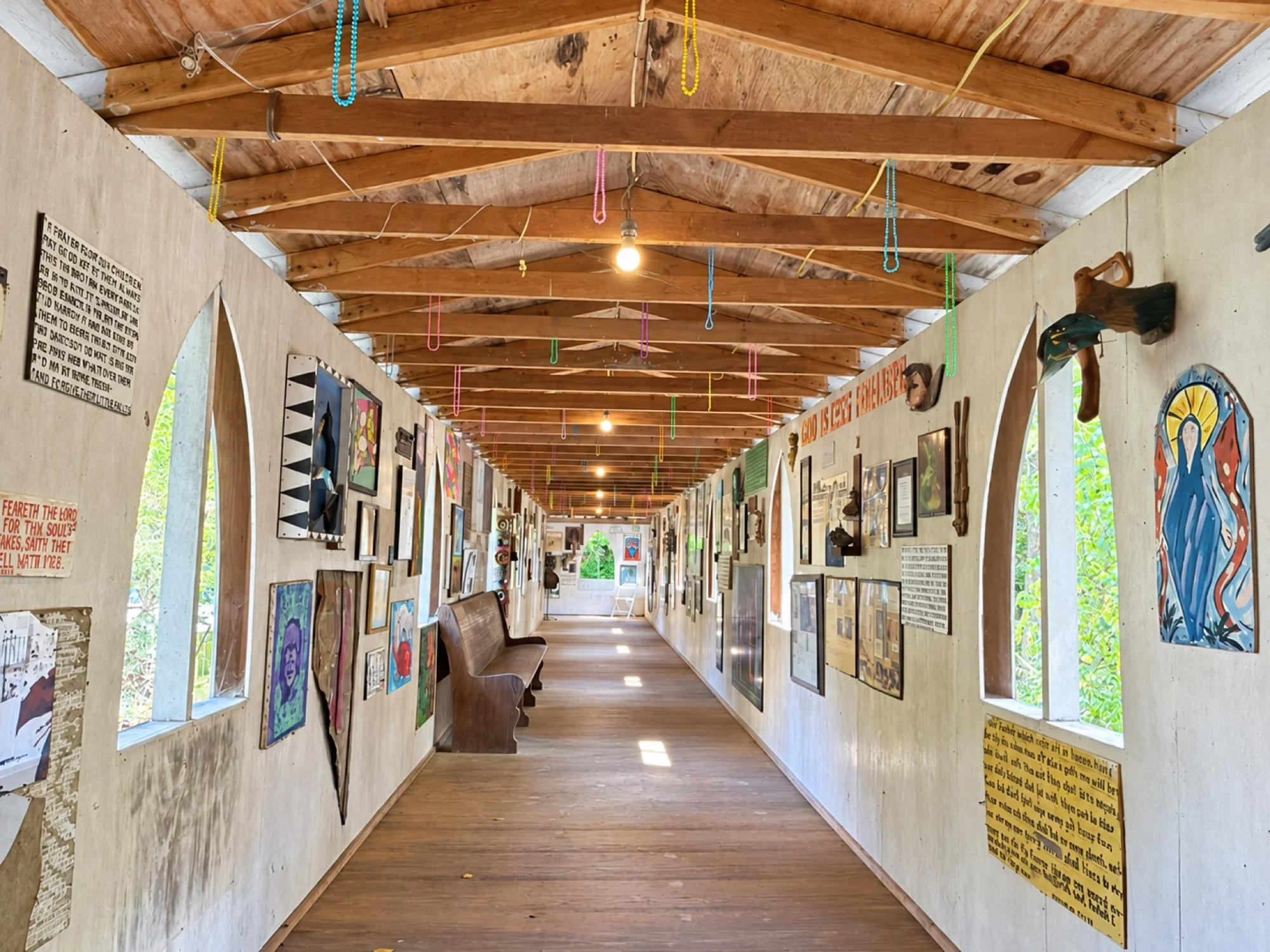
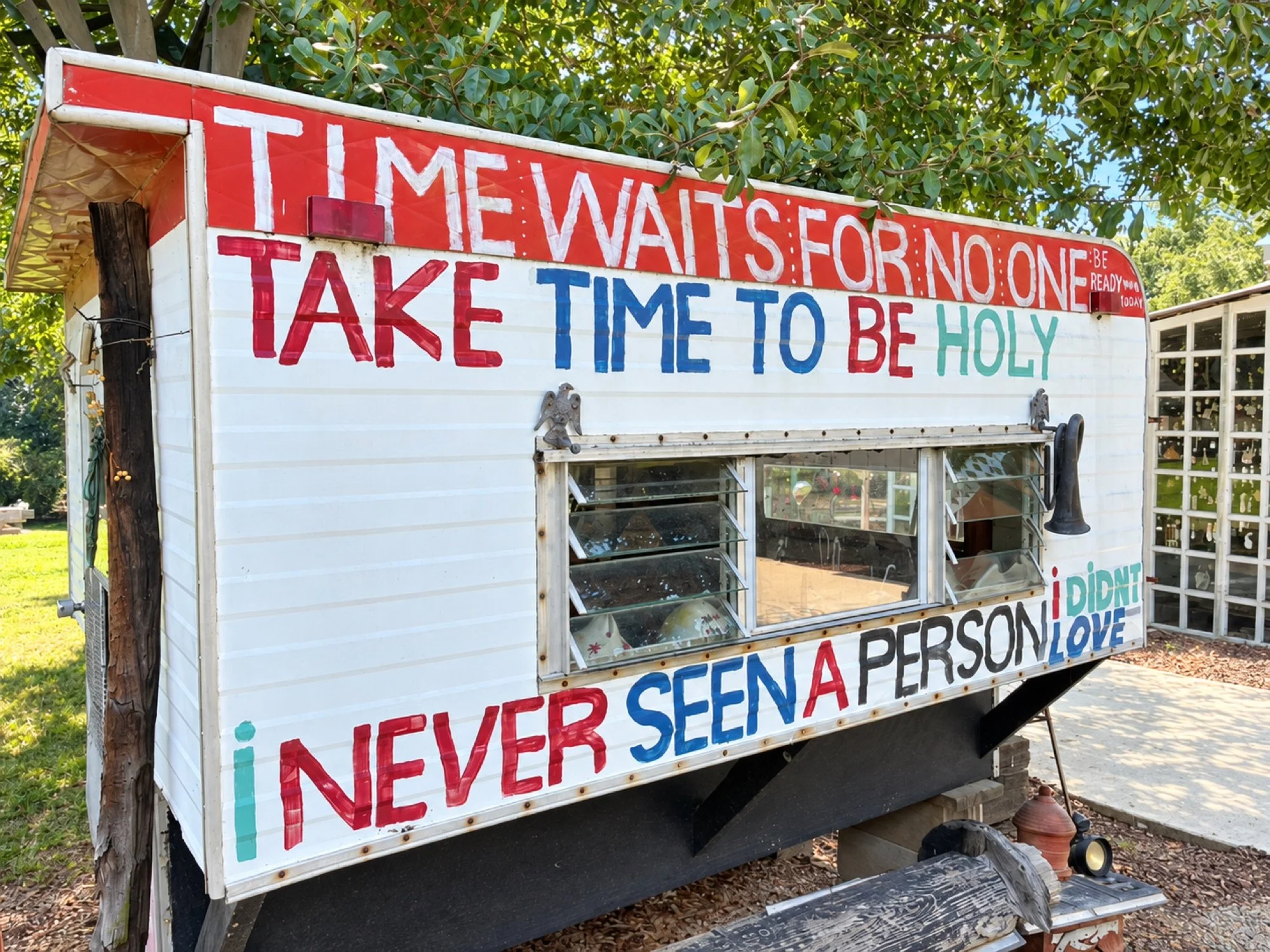
Paths wind past mosaics, mirrors, bicycle parts, concrete, tools, signs, scripture, and objects that seem to have been rescued just before somebody hauled them away. Buildings rise among the trees. Words cover nearly everything. The whole place can feel like a fever dream rendered in concrete, paint, scripture, and found objects. Look closely at one thing and another waits just beyond it, asking for your attention.
This was Howard Finster’s world.
Today, Paradise Garden occupies four acres in Summerville, Georgia, a small town tucked into the northwest corner of the state, not far from the Alabama line. It is part art environment, part museum, part garden, and part something considerably harder to categorize. That seems appropriate for a man who resisted easy categorization himself.
Finster was a Baptist preacher. He repaired bicycles. He collected tools and curiosities. He built things, planted things, and preached. Eventually, he became one of the most recognizable self-taught artists in America, with work that landed in museums, on album covers, and in the broader current of American popular culture.
But starting there gets the story backward.
Long before the art establishment knew his name, Howard Finster was already building a place he believed mattered.
Before Paradise
Born in rural Alabama in 1916, Finster began preaching as a teenager and spent years serving churches in Alabama, Georgia, and elsewhere. Faith was not something he later added to his artwork as a motif. It was the framework through which he understood his life.
So was making.
Finster was fascinated by objects, inventions, and the evidence of human ingenuity. He collected tools, handmade pieces, machinery, and curiosities, eventually creating what he called the Plant Farm Museum after moving to Georgia. What would become Paradise Garden grew from that impulse.
The collection wasn’t about accumulating valuable things. Finster was interested in what things revealed about the people who made them.
A discarded tool could be evidence of ingenuity. A broken bicycle could become material. A piece of glass could catch light differently once embedded in concrete. Things that had exhausted their original usefulness didn’t necessarily need to be finished.
At Paradise Garden, almost nothing appears entirely finished.
That may be part of its appeal.
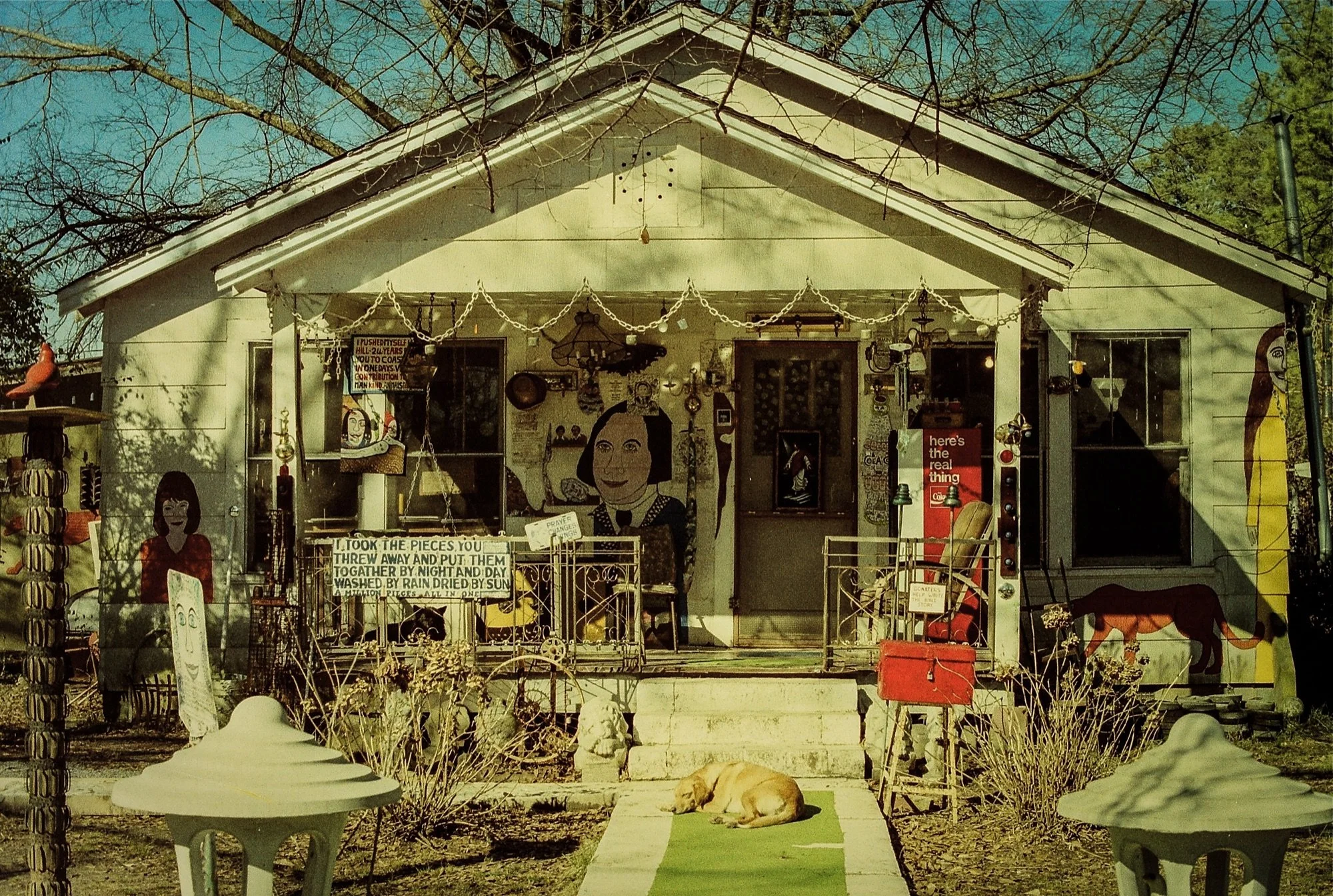
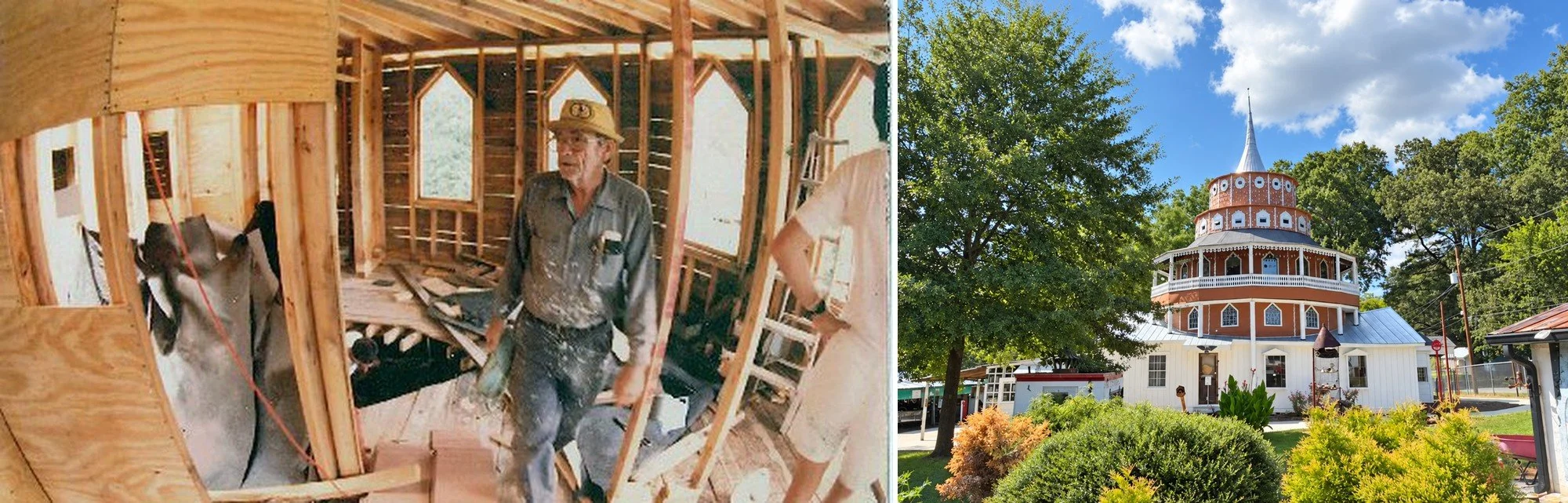
Finster kept adding to the property. Structures appeared. Walkways expanded. Objects became embedded in walls and towers. Religious messages joined handmade signs, painted figures, and bits of popular culture. The Garden gradually became less a collection of objects than an environment created according to one man’s internal logic. The Smithsonian describes the evolving environment as having been built from cast-off technology and objects accumulated through Finster’s bicycle and television repair businesses and other trades.
Then, according to Finster, something happened that changed the purpose of his work.
A Face on His Finger
In 1976, Finster was using his hands to apply paint when he noticed that the paint on one finger had formed what looked like a human face. The experience became central to his story. Finster said a voice told him to make sacred art. He was 59 years old.
From that point forward, painting became another form of ministry. Finster initially set himself a goal of producing 5,000 works. He reached number 5,000 in 1985.
He did not stop.
By the time of his death in 2001, Finster had numbered 46,991 works.
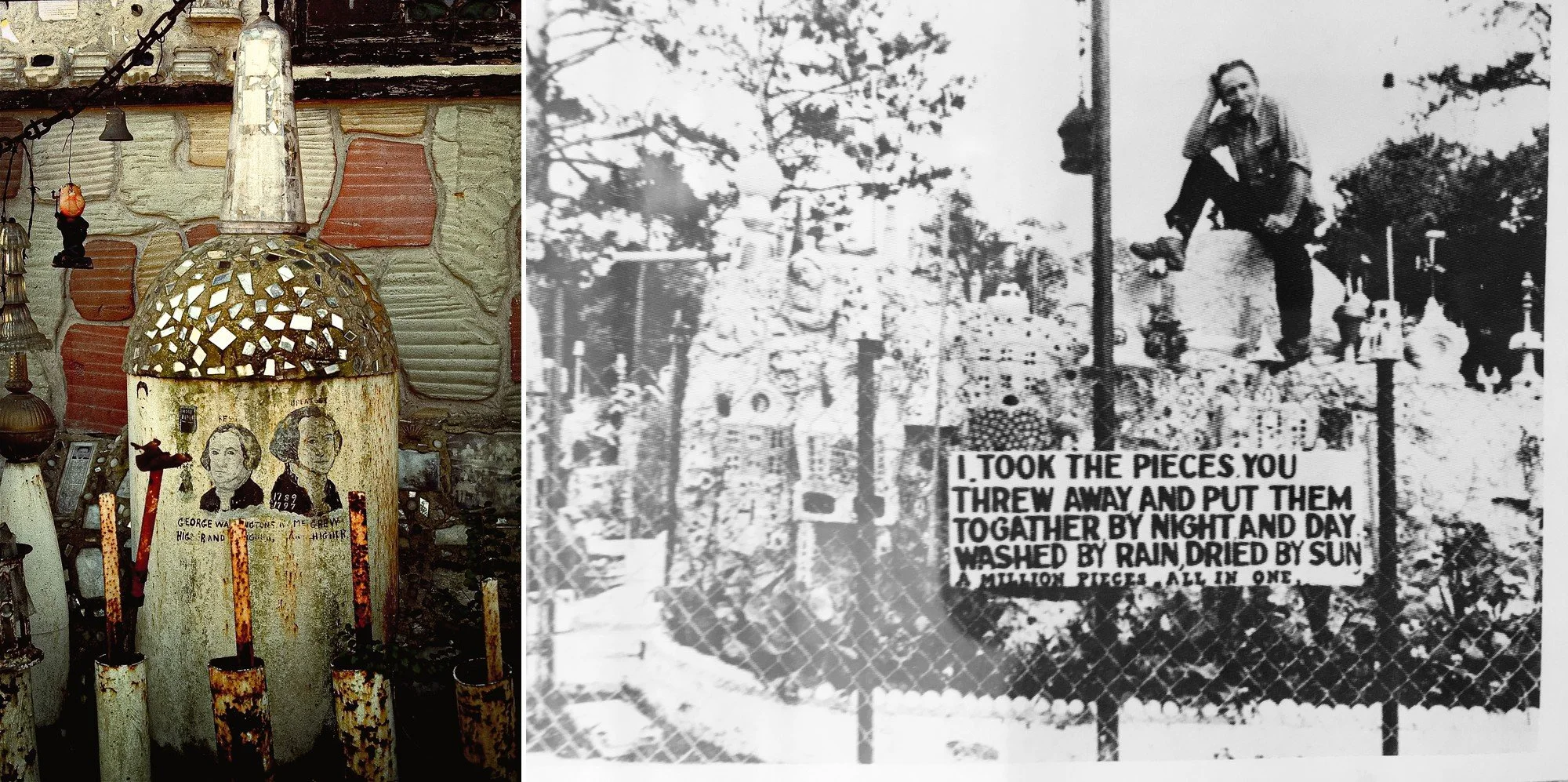
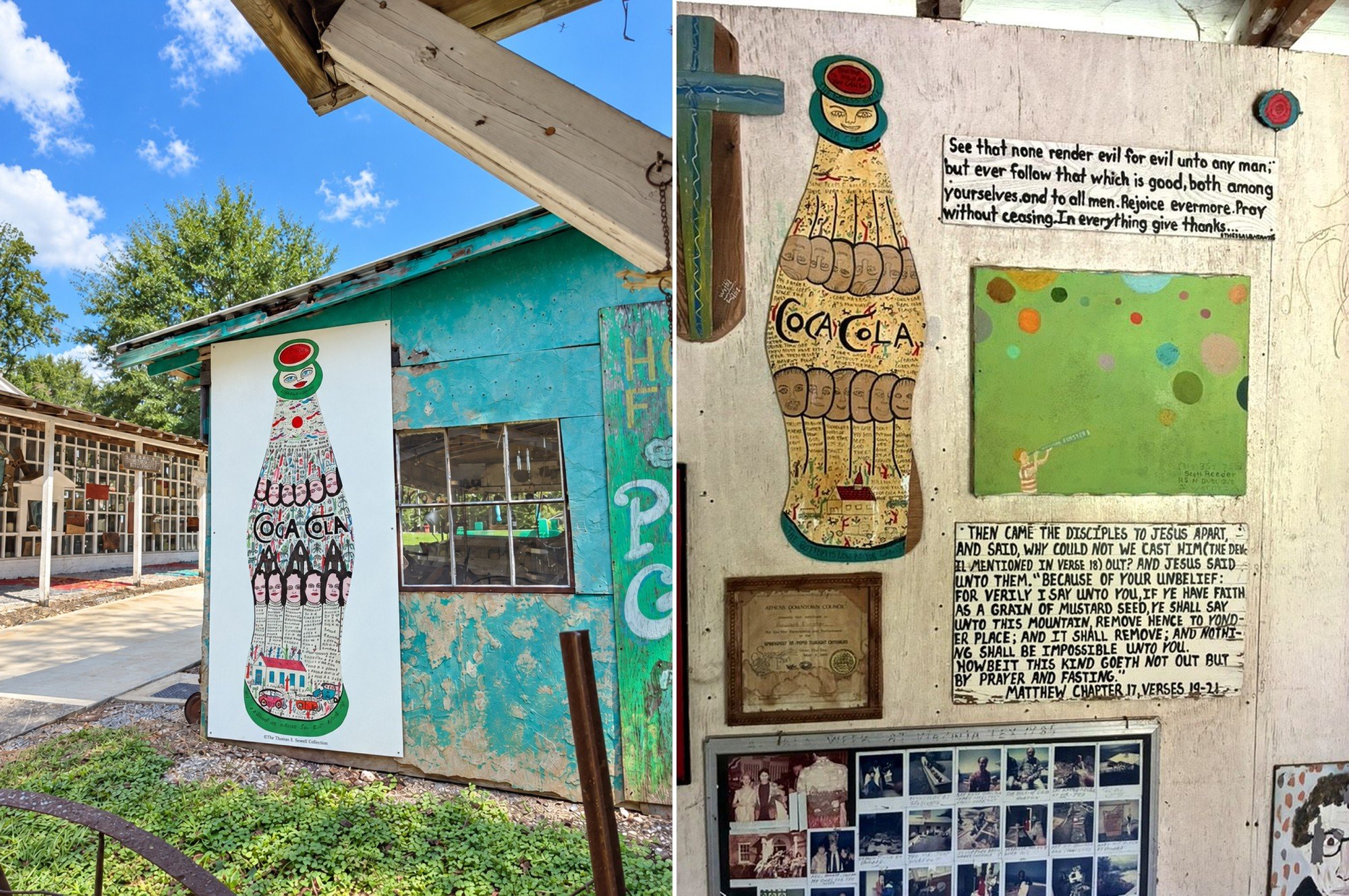
The number is useful because it conveys something descriptions such as prolific don’t quite capture. Finster worked with an urgency that could appear almost industrial, covering paintings, cutouts, and found materials with images and tightly packed words. Biblical passages sat alongside observations, warnings, humor, and commentary. Elvis might occupy the same universe as George Washington, angels, spaceships, and Coca-Cola.
To encounter the work individually is one thing. To stand inside Paradise Garden and see what that impulse became at scale is another.
The Garden wasn’t simply where Finster made art.
The Garden was art.
When the Outside World Arrived
By the early 1980s, something else was happening in Georgia.
A generation of musicians and artists was gathering around Athens, roughly two hours away, creating work that didn’t seem particularly interested in asking permission from New York or Los Angeles. Among them was R.E.M.
The band’s connection to Finster helped introduce his visual world to an entirely different audience. R.E.M. filmed the video for “Radio Free Europe” at Paradise Garden, and Finster collaborated with Michael Stipe on artwork associated with the band’s 1984 album Reckoning. Soon his work was moving well beyond Summerville.
In 1985, Talking Heads released Little Creatures with a Howard Finster painting on its cover. His work appeared in major exhibitions and entered museum collections, including that of the Smithsonian American Art Museum.
It makes for an irresistible discovery story: eccentric preacher makes art in small-town Georgia, famous musicians stumble across him, the world notices.
But Finster had already spent decades preaching, collecting, building, and making before popular culture arrived at his gate. Paradise Garden didn’t become interesting because famous people visited it.
They visited because it was already interesting.
That distinction matters because Finster has frequently been described using terms such as folk artist, outsider artist, and visionary artist. Those labels can be useful. They can also make people like Finster sound as though they existed entirely outside the culture until the established art world discovered them.
Finster wasn’t outside his culture at all. He was deeply inside his own.
He preached in Southern churches. He repaired neighbors’ bicycles. He collected the material remains of ordinary lives. His paintings drew from religion, American history, advertising, music, memory, and the visual language surrounding him.
The unusual part wasn’t that Finster had somehow escaped his surroundings.
It was what he did with them.
What Do You Do With Paradise?
The question became more complicated after Finster died in 2001.
Environments created by a single person are notoriously difficult to preserve. Their makers don’t leave conventional architectural plans. Materials weren’t necessarily chosen to last for generations. A bottle embedded in concrete or a handmade structure assembled over years presents different conservation problems than a painting hanging safely inside a museum.
And Paradise Garden had another complication.
It was a place.
You could remove individual Finster works and preserve them elsewhere, but you couldn’t put Paradise Garden in a climate-controlled gallery without destroying the thing that made it Paradise Garden.
The property deteriorated in the years surrounding and following Finster’s death. Its future was uncertain until Chattooga County purchased the site. The Paradise Garden Foundation subsequently undertook preservation of the property, keeping Finster’s environment accessible while confronting the unusual conservation demands of an outdoor art environment.
Preserve too little and the Garden disappears.
Restore too much and it risks becoming a replica of itself.
That question extends beyond Finster.
Across the South, communities are deciding what deserves another life. Old mills become restaurants. Railroad beds become trails. Theaters reopen. Bridges once considered obsolete become public spaces. Folk traditions that once seemed ordinary enough to ignore are documented because someone realizes the people who know how to do them are disappearing.
Paradise Garden belongs to that conversation.
It is especially interesting because nobody could reasonably call it conventional historic architecture. It is peculiar, personal, religious, exuberant, and occasionally bewildering.
Summerville decided it was worth keeping anyway.
Paradise, Continued
Preservation here doesn’t mean sealing Paradise Garden in amber.
Finster Fest, the annual celebration held on the property, may be the clearest evidence of that. The 2026 festival, held September 19 and 20, once again brought artists, musicians, and visitors into the Garden.
For a weekend, the place Finster spent decades building became a backdrop for people still doing exactly what he did so compulsively: making things.
That matters.
Paradise Garden could have become a preserved curiosity, a place visitors came to see what one extraordinary man once made. Instead, events like Finster Fest allow the Garden to function as something more complicated. It preserves Finster’s world while making room for new work, new artists, and new reasons to gather there.
The impulse to make unusual things on your own terms is hardly gone from Georgia.
Deep roots don’t require standing still.
A Garden and a Town
Paradise Garden now draws visitors to a corner of Georgia many travelers might otherwise pass on the way somewhere else. Finster Fest extends that reach, bringing artists, musicians, and visitors into Summerville and carrying the Garden’s original creative impulse beyond Finster himself.
That relationship between the place and the town may be one of the most interesting chapters still being written.
Finster’s reputation belongs to American art history now. His work hangs far from northwest Georgia.
Paradise Garden cannot be separated so easily.
It remains rooted to the ground where he built it.
There is a temptation with people like Howard Finster to smooth the edges after they’re gone.
Museums have a way of doing that. Biography can, too. A complicated life becomes a timeline. Thousands of individual works become a career. The strange little decisions that accumulated into a place like Paradise Garden get organized into movements and periods.
Paradise Garden resists some of that tidying.
Walk through it and Finster’s abundance remains everywhere. One message competes with another. A path leads somewhere unexpected. Something discarded becomes decorative. Something humorous sits beside something deeply religious. You can admire a mosaic without entirely understanding why it exists.
Perhaps you aren’t supposed to.
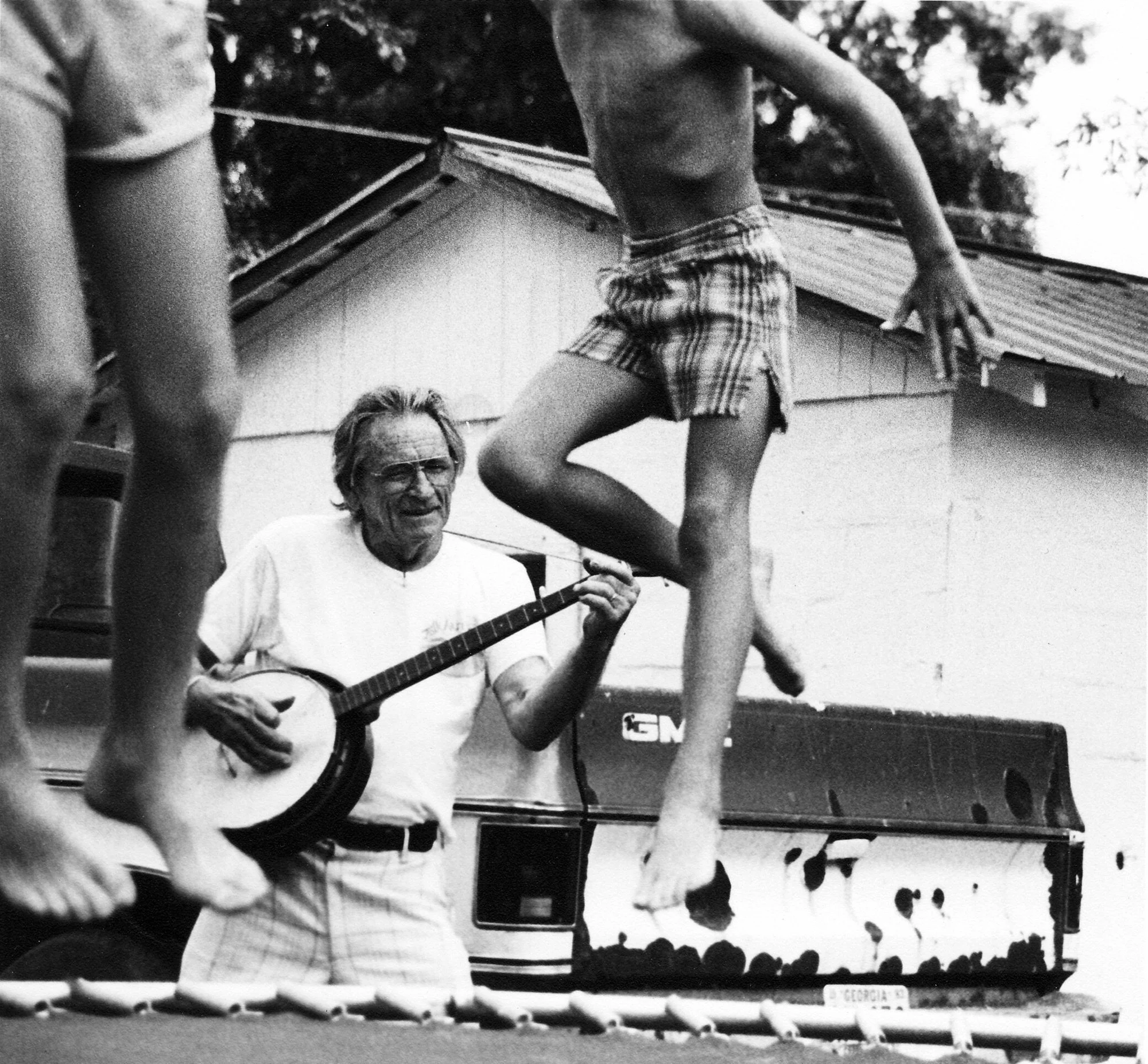
Finster described himself less as an artist than as an instrument. Whatever one makes of his visions, that belief helps explain the astonishing volume of work he left behind. He believed he had something to say, and he approached the assignment with very little interest in restraint.
Nearly twenty-five years after his death, people still drive into Summerville to walk through the world he assembled from concrete, paint, scripture, bicycle parts, mirrors, castoffs, and conviction.
Howard Finster spent much of his life trying to get a message out.
Paradise Garden is still delivering it.
Howard Finster’s Paradise Garden · Summerville, Georgia
200 North Lewis Street · Summerville, GA 30747
Plan a Visit to Howard Finster’s Paradise GardenJoin In
Show us what you see, who you know, and what matters.