
After Midnight
The Savannah That Refused to Stay on the Page
Part of Southerly Gothic, an October series from The Southerly Way exploring the legends, histories, and lingering stories the South refuses to let go.
In Savannah, the haunting isn’t confined to a house or cemetery. Sometimes a story becomes so powerful that an entire city has to live with it.
Savannah was strange before John Berendt got there. That is worth establishing immediately.
The squares were already beautiful, Bonaventure Cemetery was already haunting, and old houses had accumulated generations of stories, scandals, and secrets. Savannah did not need a writer from New York to make it interesting.
Then Midnight in the Garden of Good and Evil happened, and the rest of the world noticed.
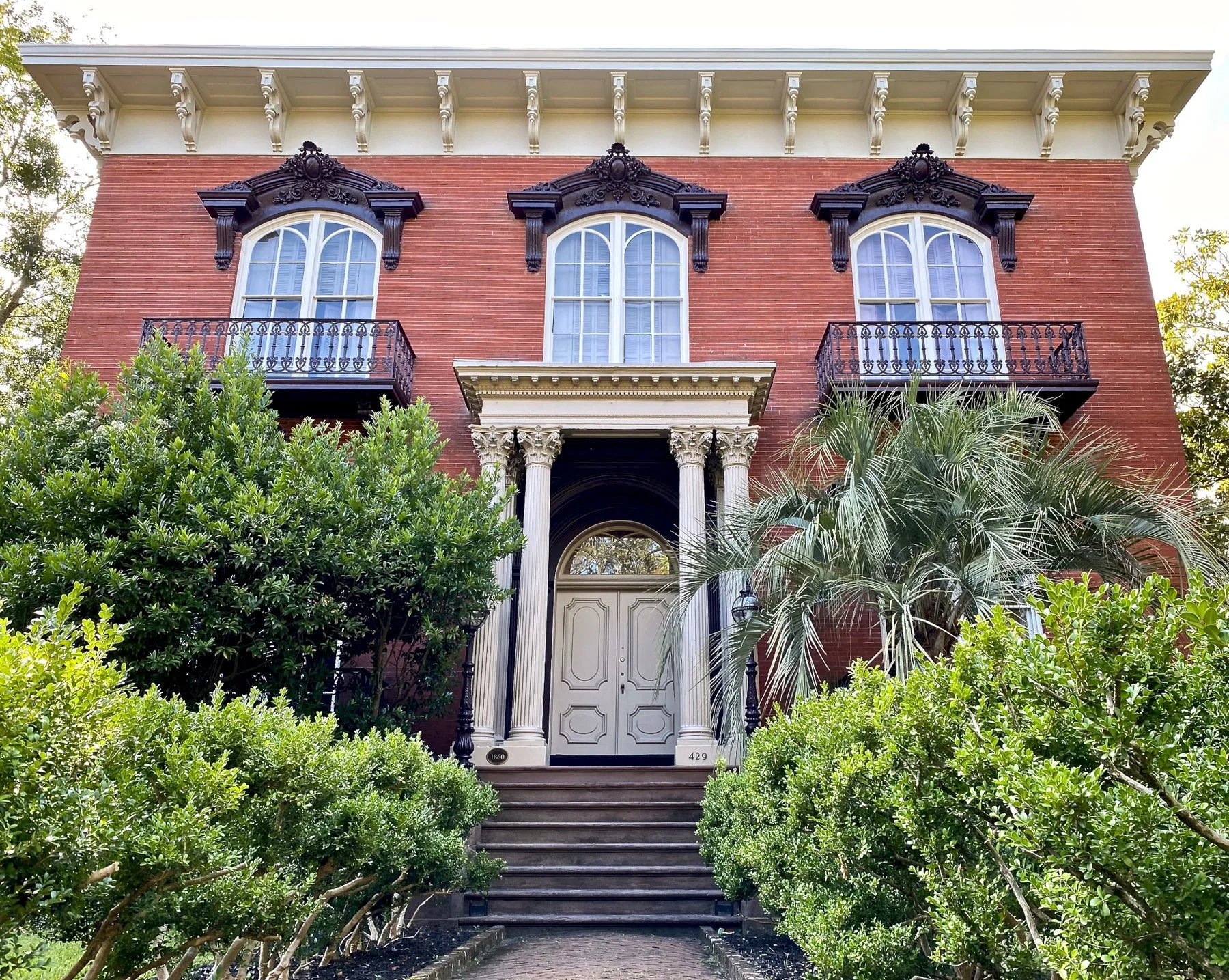
Published in 1994, Berendt’s book was difficult to categorize from the beginning. There was a killing at its center: antiques dealer and preservationist Jim Williams was accused of killing Danny Hansford inside Mercer House. But murder was only part of what fascinated readers.
There was Savannah itself.
Berendt populated the book with people who seemed almost too perfectly cast to be real: aristocrats and eccentrics, preservationists and performers, lawyers and neighbors, and Lady Chablis, who became one of its most unforgettable figures. Then there was the city surrounding them, with its houses, squares, cemetery, and the sense that behind every beautiful facade someone knew something they might tell you if you stayed long enough.
Readers did not merely buy the book. They went looking for its Savannah.
When a Book Becomes a Destination
Mercer House became internationally recognizable.
Visitors sought out Bonaventure Cemetery, where the Bird Girl sculpture photographed for the book’s cover once stood. They followed locations and characters through a real city with a book in their hands.
Savannah had been a tourism destination long before Midnight. The book simply gave visitors a different lens through which to see it: not merely beautiful, but beautiful and strange.
More than three decades later, that distinction remains remarkably durable.
Which raises an interesting question: what happens when the story people arrive expecting becomes almost as powerful as the place itself?
Jim Williams’ connection to Savannah extended well beyond Mercer House. As an antiques dealer and preservationist, he restored numerous historic properties around the city, including the Hampton-Lillibridge House. That house accumulated supernatural stories of its own during and after restoration, including unexplained sounds, strange occurrences, and accounts of workers who became uncomfortable inside.
As with so many haunted houses, the documentation and folklore do not always travel neatly together. But the connection feels almost too perfect. The man at the center of Savannah’s most famous modern story also helped preserve a house that became part of its supernatural mythology.
In Savannah, stories have a way of finding one another.
Bonaventure and the Stories We Leave Behind
Then there is Bonaventure.
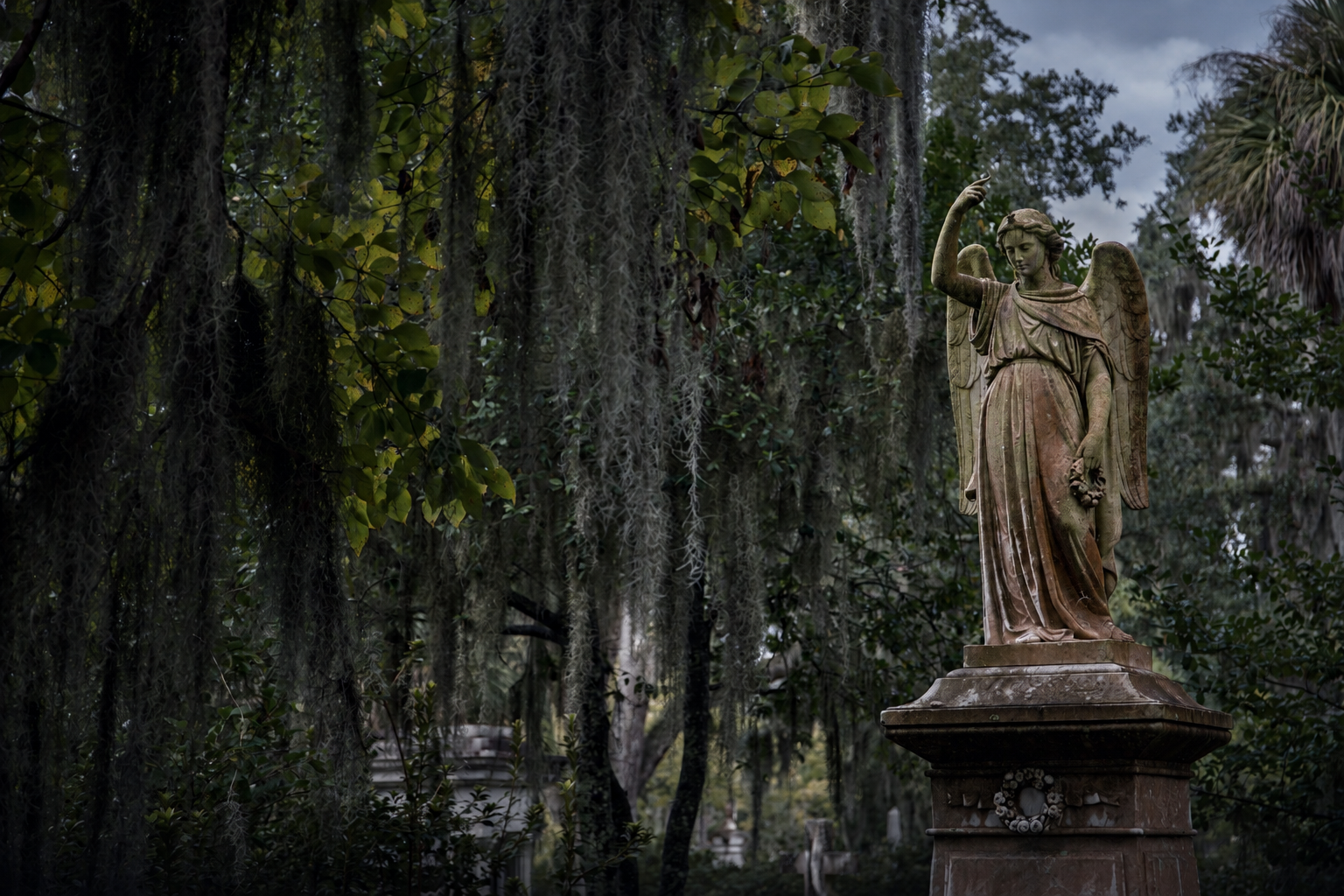
Long before Midnight, people came because the cemetery is extraordinarily beautiful. Live oaks stretch over monuments, Spanish moss moves overhead, and sculpture, landscape, and memory blur together. The book introduced it to an enormous new audience.


Among the cemetery’s most visited graves is that of Gracie Watson, who died at six years old in 1889. Her father commissioned a remarkably lifelike marble sculpture of his daughter, and over time stories grew around Little Gracie. Visitors leave gifts. Ghost tales followed.
Whether marble tears have ever fallen is less interesting than the fact that strangers still stop at the grave of a child who died more than a century ago.
The story has kept her name alive.
There it is again: memory.
Perhaps Midnight succeeded because Berendt understood something essential about Savannah. The city did not need to be invented. It needed to be observed. Its contradictions were already there: elegance beside eccentricity, beauty beside decay, public manners beside private secrets, history that could be charming in one telling and deeply uncomfortable in another.
The book gathered those things into a story the rest of the country could not resist. Once millions of readers imagined Savannah that way, the city inherited their imagination.

Savannah was strange before John Berendt arrived. It was beautiful before Midnight, eccentric before Hollywood, and haunted long before ghost tours lined up after dark. But the book gave millions of outsiders permission to see the city differently.
More than three decades later, visitors are still looking for that Savannah.
Maybe that is the most powerful kind of ghost story of all.
Not a dead person who refuses to leave a place, but a story so powerful the place can never quite escape it.
Join In
Show us what you see, who you know, and what matters.